Why Should I Care About Patterns?
Care influences which patterns we attend to, which we perpetuate, and which we choose to interrupt. Pattern recognition without care could become merely prediction, categorization, or control. The underlying question becomes: What patterns have made this belief feel obvious to me?
Belief → Patterns
A belief does not simply appear. It emerges from prior patterns—experience, repetition, culture, assumptions, stories, categories. “What pattern formed this belief?” These patterns, including belief perseverance, can scale up as they spread across individual, group, institutional, and cultural scales.
What happens when reality pulls against the patterns that support what I believe? I recognize the structure I have been repeating.
Care as a Weave
Care has two interwoven forms. One is care as nourishment: attention, tending, patience, protection, and conditions for growth. The other is care as enacted value: values are not merely propositions we assent to; their meaning becomes visible in response, choice, restraint, responsibility, and action. Neither form is sufficient by itself. Nourishment without values can become indiscriminate preservation—sustaining a structure simply because it exists. Values without nourishment can become abstraction or severity—declaring what matters without creating the conditions in which it can actually be lived.
How to Read the Wheel
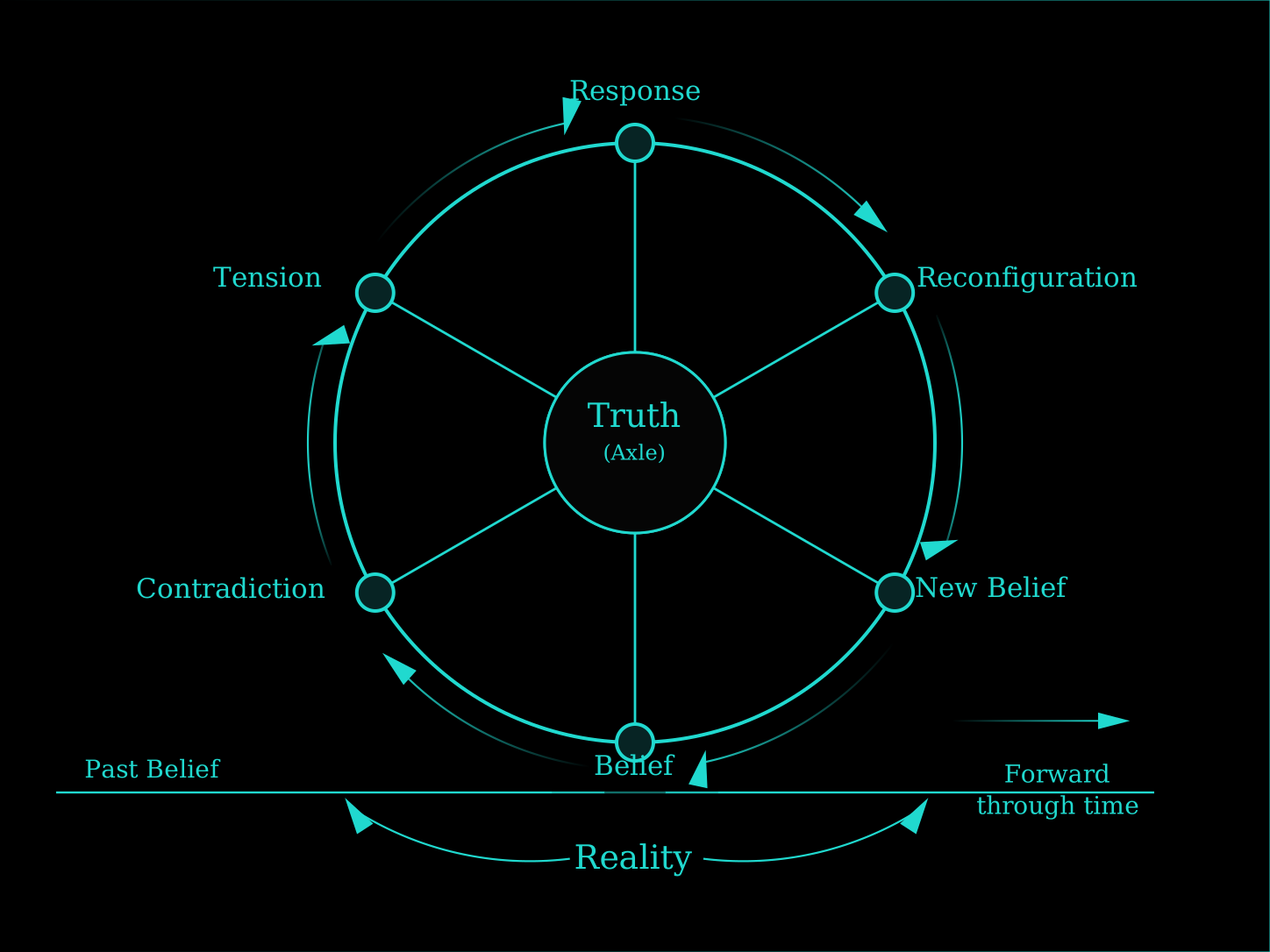
Truth is the axle—not another stage in the process, and not a claim that we possess final truth, but the reference toward which the process is oriented. Reality is the ground against which beliefs are tested. At any instant, one stage is at the point of contact; as the wheel moves forward, that point of contact changes continuously.
Inquiries
These questions can clarify the patterns that establish belief:
- What pattern am I repeating?
- Am I acting with integrity?
- Am I aligning with reality or defending identity?
- What pattern formed this belief?
- Who or what am I accountable to?
- What change is possible?
- What might I still not see?
How This Fits With Fractegrity
The wheel describes the process of interrupting belief perseverance through time. Fractegrity provides seven lenses through which that process can be examined across scale and context.
- Person — look for habits that cause tension
- Group — notice recurring events that cause disagreement
- Institution — create systems that rely on new beliefs to improve efficiency and productivity
- Culture — create new alliances without erasing history so that past patterns can be revealed
Patterns do not remain abstract for long. Once recognized and repeated, they begin to shape behavior, expectation, and response. What starts as perception gradually becomes practice. Over time, these repeated patterns settle into beliefs. The impacts of these beliefs are rarely sudden or dramatic; they are cumulative, embodied, and often unnoticed.
Next threads to pull:
One: Why Should I Care About Patterns?
Two: Why Should I Care About Integrity?
Three: Why should I Care About Accountability?
Four: Why Should I Care About Alignment?