
Why Should I Care About Accountability?
Care transforms accountability from punishment into responsibility, repair, and learning. It does not eliminate consequences; it gives them purpose beyond retribution.
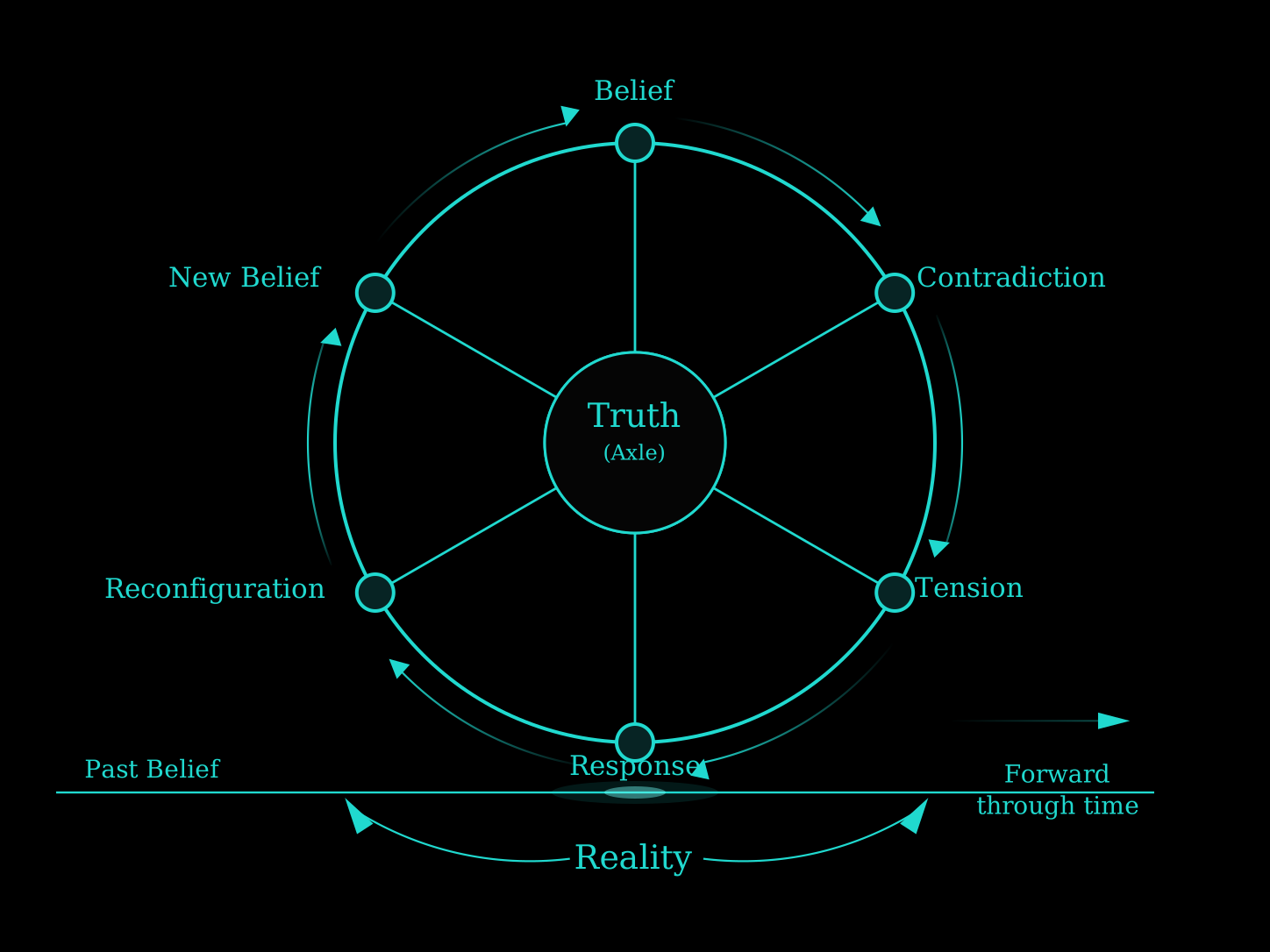
Response → Accountability
Accountability is where evidence must be either admitted or refused. Evidence is feedback; accountability permits something outside the self or system to reveal error and require response.
Evidence provides a feedback mechanism, and refusing evidence is, in a sense, refusing feedback. Accountability means allowing information outside ourselves to alter the structure inside ourselves.
Care as a Weave
Care has two interwoven forms. One is care as nourishment: attention, tending, patience, protection, and conditions for growth. The other is care as enacted value: values are not merely propositions we assent to; their meaning becomes visible in response, choice, restraint, responsibility, and action. Neither form is sufficient by itself. Nourishment without values can become indiscriminate preservation—sustaining a structure simply because it exists. Values without nourishment can become abstraction or severity—declaring what matters without creating the conditions in which it can actually be lived.
How to Read the Wheel
Truth is the axle—not another stage in the process, and not a claim that we possess final truth, but the reference toward which the process is oriented. Reality is the ground against which beliefs are tested. At any instant, one stage is at the point of contact; as the wheel moves forward, that point of contact changes continuously.
What happens when reality pulls against what I believe?
Response is where professed values become as-lived values. Now that I know, what will I do?
Inquiries
Accountability — what supports it? These questions can clarify accountability:
- Am I acting with responsibility and integrity?
- Am I aligning with reality or defending identity?
- Who or what am I accountable to?
- What change is possible?
- What might I still not see?
- What evidence am I accepting or avoiding?
How This Fits With Fractegrity
The wheel describes the process of interrupting belief perseverance through time. Fractegrity provides seven lenses through which that process can be examined across scale and context.
- Person — reacts emotionally vs. integrating experience
- Group — escalates conflict vs. renegotiating expectation
- Institution — crisis-driven reform vs. structural learning
- Culture — emergency measures vs. durable transformation
Accountability can be seen as a geometry of promise—how commitments are made durable without becoming harsh, how refusal can be responsibility, and how responsibility can extend beyond success, applause, or completion. It invites inquiry over certainty and care over control—so responsibility remains human while consequences remain real.
Next threads to pull:
One: Why Should I Care About Patterns?
Two: Why Should I Care About Integrity?
Three: Why should I Care About Accountability?
Four: Why Should I Care About Alignment?