
Why Should I Care About Alignment?
Care keeps alignment from becoming conformity. Genuine alignment can preserve difference while seeking resonance and relationship.
What happens when reality pulls against what I believe?
When evidence, belief, language, and action correspond reasonably well, there is alignment. I adjust my understanding toward what is. Belief perseverance creates misalignment: our internal model and external reality begin to diverge
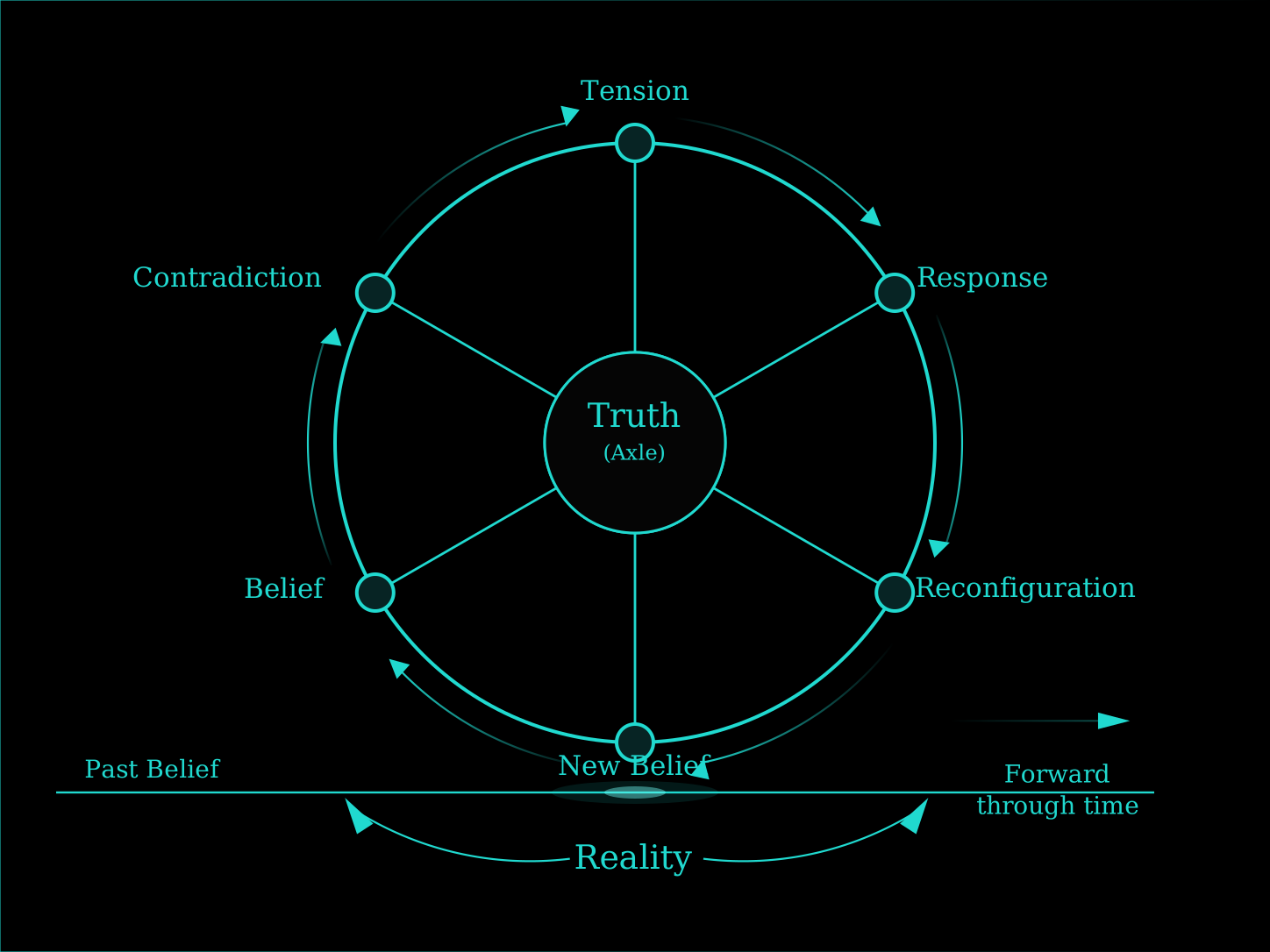
New Belief → Alignment
Alignment tests whether the reconfigured internal model corresponds more closely with reality. A new belief ideally enables movement toward better correspondence with what reality presently allows us to understand—not because the new belief is now truth, but because it must itself encounter reality. “New belief” should not become a triumphal endpoint because the wheel continues to turn!
With alignment, revision is movement toward better correspondence between our internal model and reality. We do not acquire truth; we become more aligned with what reality presently allows us to understand.
Care as a Weave
Care has two interwoven forms. One is care as nourishment: attention, tending, patience, protection, and conditions for growth. The other is care as enacted value: values are not merely propositions we assent to; their meaning becomes visible in response, choice, restraint, responsibility, and action. Neither form is sufficient by itself. Nourishment without values can become indiscriminate preservation—sustaining a structure simply because it exists. Values without nourishment can become abstraction or severity—declaring what matters without creating the conditions in which it can actually be lived.
How to Read the Wheel
Truth is the axle—not another stage in the process, and not a claim that we possess final truth, but the reference toward which the process is oriented. Reality is the ground against which beliefs are tested. At any instant, one stage is at the point of contact; as the wheel moves forward, that point of contact changes continuously.
Inquiries
These questions can help clarify the alignment of a new belief:
- What am I aligning myself with?
- Am I acting with integrity?
- Am I aligning with reality or defending identity?
- What change is possible?
- What might I still not see?
- Does the newly formed understanding actually align better with what is?
How This Fits With Fractegrity
The wheel describes the process of interrupting belief perseverance through time. Fractegrity provides seven lenses through which that process can be examined across scale and context.
- Person — integrity between belief, feeling, and action
- Group — clarity of expectation and mutual responsiveness
- Institution — systems that support stated intentions
- Culture — narratives that reinforce rather than distort values
Alignment is not about forcing consistency. It is about allowing coherence to emerge when values, intentions, actions, and consequences are oriented in compatible ways.
Next threads to pull:
One: Why Should I Care About Patterns?
Two: Why Should I Care About Integrity?
Three: Why should I Care About Accountability?
Four: Why Should I Care About Alignment?