The Universe as a Web of Relationship
How stability emerges through interdependence
At the largest scales we can imagine, the universe does not appear as a collection of isolated objects. It appears as relationship. Galaxies do not exist alone. Stars are born in clusters. Planets form within disks. Matter gathers, disperses, recombines, and gathers again. What holds across these scales is not solidity, but pattern—persistent interaction shaping form over time.
Stability at the universal scale does not arise from fixed positions or rigid frameworks. It arises from interdependence: forces in conversation, motions in proportion, influences that balance without canceling one another. The universe holds together not because everything is anchored, but because everything relates to something else.
Motion and Relationship Are Not Opposites
At cosmic scales, motion is the rule, not the exception. Nothing stands still. Stars orbit galactic centers. Galaxies drift within clusters. Even the clusters themselves participate in larger flows shaped by gravity and expansion. Yet this motion does not dissolve structure. It creates it.
Relationship allows motion to become meaningful rather than chaotic. Forward momentum without attraction would scatter matter into isolation. Attraction without motion would collapse everything inward. Stability emerges precisely because neither force exists alone. The universe is not balanced despite motion. It is balanced through motion.
Interdependence as Structural Support
What we call “forces” are better understood as relationships that persist. Gravity is not a thing objects possess; it is how mass relates to mass. Electromagnetic interactions are not substances; they are patterns of influence. Even space and time are not passive stages, but participants in the structure of reality. Nothing supports itself independently. Every structure relies on what surrounds it.
Stars depend on surrounding matter to form. Planets depend on stars. Life depends on planetary stability. Elements forged in stellar interiors become the material for future worlds. The universe is recursive in this way: what supports one scale is generated by another. Interdependence is not fragility. It is durability distributed across relationship.
Structure Without Central Control
There is no single anchor holding the universe in place. No fixed point from which everything is suspended. Instead, structure emerges from countless local relationships interacting coherently across scale. Centers exist—but they are shared. Orbits form around barycenters. Galaxies organize around gravitational wells shaped by many masses. Even apparent “centers” are dynamic, responsive, and influenced by what they organize. This challenges a deeply human assumption: that stability requires a controlling center. At universal scale, coherence does not come from dominance. It comes from mutual influence held in proportion.
Self-Similarity Across the Vast and the Intimate
Patterns of relationship repeat across scale without becoming identical. Atomic systems echo planetary ones—not in size, but in relational logic. Spiral galaxies resemble hurricanes—not because they are governed by the same materials, but because similar relationships between rotation, flow, and constraint are at work. These are not copies. They are resonances.
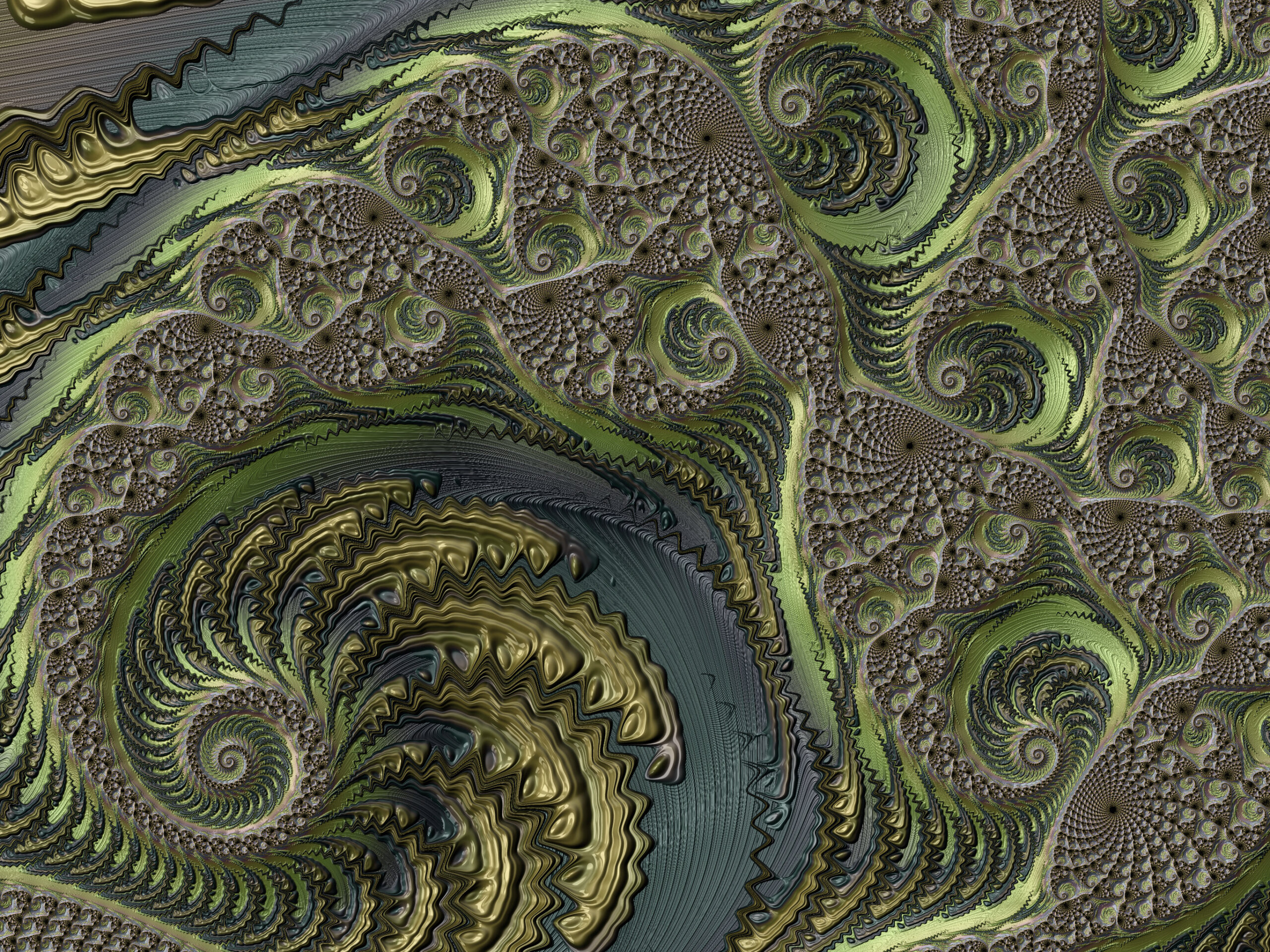
The universe does not repeat forms because it is constrained to do so. It repeats relationships because those relationships work. This is why fractal structures feel intuitive rather than arbitrary. They reveal that coherence is not scale-dependent. What holds at one level can hold at another—if relationship is preserved.
Stability as Shared Responsibility
At universal scale, nothing carries load alone. Stress is distributed. Influence is reciprocal. No element remains unchanged by what it supports. This reframes stability itself. Stability is not something achieved once and secured forever. It is an ongoing condition sustained by participation. When relationships hold, systems endure. When relationships degrade, instability follows—not as punishment, but as consequence. This is as true for galaxies as it is for ecosystems, societies, and selves.
Why This Matters
Seeing the universe as a web of relational stability changes how we understand our place within it. We are not anomalies in an otherwise mechanical system. We are expressions of the same pattern: coherence emerging through relationship. The same principles that allow galaxies to endure—motion held by attraction, influence without contact, structure without solidity—are at work in the systems we inhabit and shape. Interdependence is not a philosophical preference. It is how reality holds.
The universe does not remain intact by standing still. It remains intact by staying in relationship. Nothing holds itself. Nothing is supported alone. Stability emerges where forces listen to one another—where motion and attraction remain in conversation across time. Seen this way, interdependence is not a vulnerability. It is the deepest form of strength the universe knows. What holds the cosmos together is not control, nor rigidity, nor isolation—but relationship sustained at every scale.
Next threads to pull:
This thread explores relational structure at cosmic scale, revealing coherence without central control.
→ The Fractal Signature of Nature: Math You Can See
Here, interdependence is followed into ethics, where connection carries responsibility.
→ A Declaration of Interdependence
This path invites humility, where participation replaces dominance.
→ Beyond: An Orientation, Not a Destination