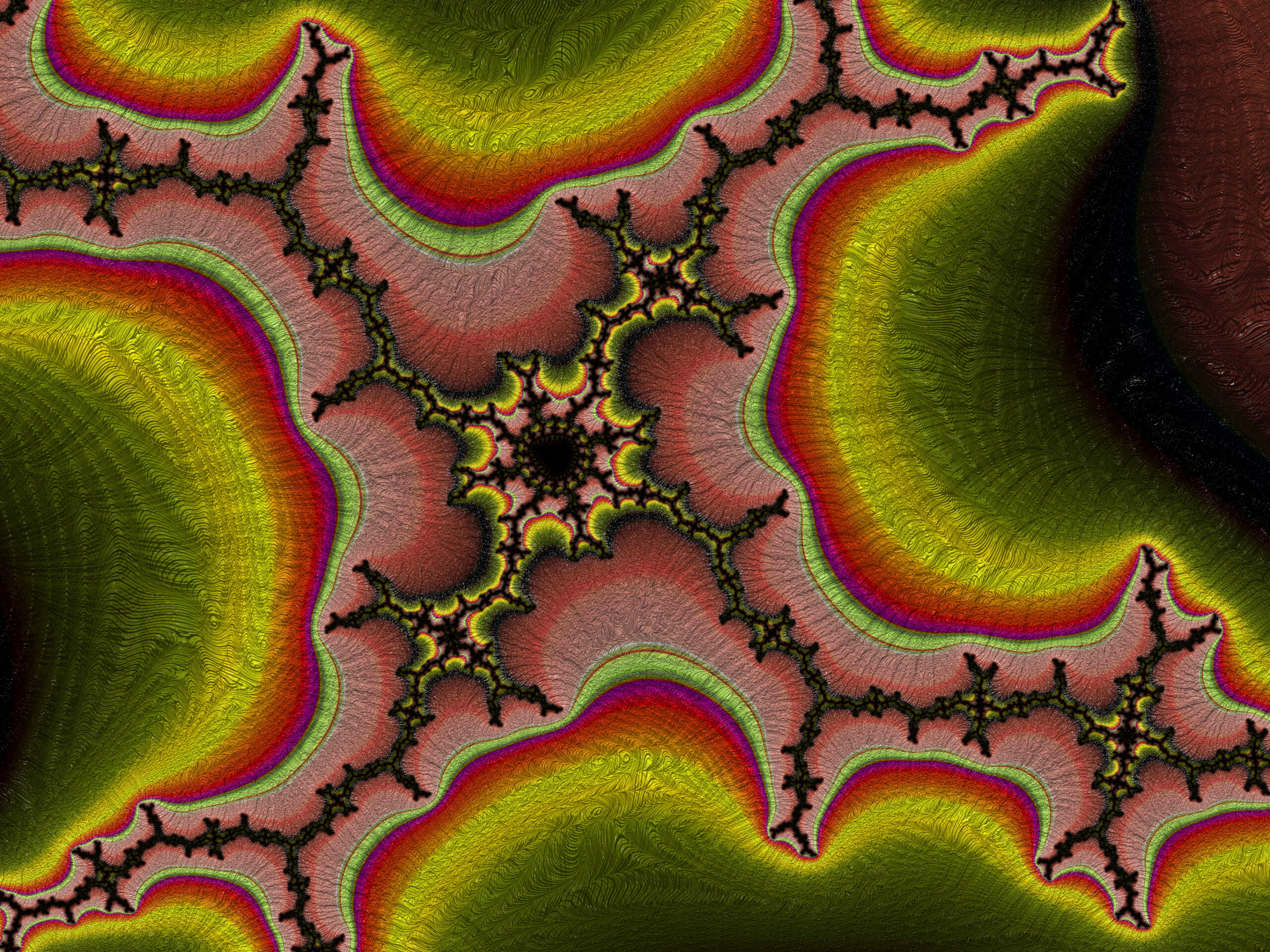
The Geometry of Alignment: Vision, Integrity and Inspiration
The Geometry of Alignment
Alignment has shape. It is not merely a feeling or a declaration — it is a relationship between elements that can be mapped, tested, and adjusted. Geometry offers a language for understanding alignment because it reveals how parts relate in space, direction, and proportion.
Direction, Not Position
Two points can occupy different locations and still be aligned if their vectors share orientation. In human systems, this distinction matters: position reflects where one stands, orientation reflects what one is moving toward. Alignment depends on direction more than proximity.
Axes of Alignment
Alignment occurs along multiple axes: values and actions, intention and outcome, individual choice and collective effect. When these axes intersect coherently, motion stabilizes. When they diverge, energy dissipates. Geometry makes divergence visible.
Angles, Tension, and Balance
Perfect alignment does not require zero tension. In fact, some tension is structural.
As in tensegrity systems, stability often arises not from uniformity, but from balanced opposition. Misalignment emerges when tension becomes asymmetric — when one force pulls without counterbalance.
Scale and Similarity
Alignment that holds at one scale must be tested at others. A strategy aligned for individuals may misalign communities. A policy aligned for nations may fracture ecosystems. Fractal geometry reminds us: similarity across scales is not automatic — it must be cultivated.
Geometry as a Tool for Realignment
By making relationships visible, geometry allows: diagnosis without blame, correction without collapse, and adjustment without abandoning purpose. Realignment is often a small angular shift, not a reversal.
Closing Orientation
Alignment is not abstract. It has direction. It has angles. It has limits. When we understand its geometry, we gain the ability not just to notice misalignment — but to turn with intention. Fractalignment (fractal alignment) is a parallel exploration of Fractegrity — how alignment in ideas and aspirations can expand through individual, community, state, nation and world. Every dream that seeks to reshape the world begins as an act of alignment — the joining of intention, imagination, and integrity. A Dream for the World calls us to declare that alignment openly, to speak it into being so that others can hear their own resonance within it. The following reflection, The Geometry of Alignment, traces that calling through lived experience: how purpose becomes plan, how conversation becomes creation, and how each act of realignment—whether of a road, an organization, or a life—brings the dream closer to reality.
A long time ago, in a reality that now feels measured in memory rather than miles, I was a land surveyor. My days were spent turning lines on a page into stakes in the soil—an act of translation between vision and terrain. The plans arrived rolled and stamped, each one an expression of intent: a road to be built, a pathway to connect one place to another. On those pages, the term alignment appeared again and again, describing both the geometry of direction and the integrity of execution.
An alignment began as an idea—a line of intent drawn by planners and engineers, approved by officials and stakeholders. But the real test came when that intent met the ground. Every curve, grade, and intersection had to be measured against reality. A single misread coordinate, a failure to communicate a revision, or a shortcut taken for convenience could ripple outward until the road itself no longer followed the design. Alignment was not a one-time act of agreement. It was a continual conversation between plan and practice.
Communication and Iteration
Communication was the lifeblood of alignment, but it was not a single conversation. It was an iteration—a rhythmic exchange between design and discovery. Each update, each adjustment, was a new version of understanding: the plans spoke, the ground replied, and the builders responded in kind.
When an obstacle appeared—a hidden rock layer, a flooding culvert, a shift in the planners’ vision—the plans had to evolve. Revisions were drawn, distributed, discussed, and sometimes redrawn again. Each cycle of feedback refined not just the roadway, but the relationships that made it possible.
Alignment, then, was never static. It was a living loop of listening and response, proof that the straightest path is often achieved through graceful correction. Iteration was not a sign of failure, but of attentiveness—the mark of those who cared enough to realign before proceeding.
Scaling Alignment
In larger projects, layers of alignment scaled upward: from local roads to interstates, from field crews to agencies, from visionaries to communities. The higher the scope, the more essential it became to honor each smaller alignment nested within it. The success of the whole depended on the resonance of the parts.
Over time, I’ve come to see that this geometry extends far beyond surveying. Organizations, relationships, and even inner lives follow the same pattern. There is always a blueprint—a dream, a mission, a sense of purpose. But without shared understanding, consistent recalibration, and integrity in execution, the project falters. Alignment is not about obedience to a plan; it’s about coherence with a purpose.
In music, alignment becomes resonance. In ethics, it becomes integrity. In art, it becomes harmony. And in life, it becomes the practice of listening—to one another, to circumstance, to the shifting contours of what’s real—and adjusting course without losing direction. To align is to participate in creation with awareness. It is to build not only the road ahead, but the trust that allows others to travel it. When alignment is true, plans become pathways, and pathways become connections. The line drawn on paper becomes a living invitation: Walk with me. Let’s see where this road can go.
Fractegrity Reflection: The Living Line
Every alignment is a fractal of intention.
A roadway mirrors a melody; a melody mirrors a mosaic; a mosaic mirrors a life.
Each depends upon the small pieces being true to their shape,
and upon the spaces between them being honored.
In the great pattern of becoming, coherence is the quiet force that turns chaos into design.
Plans may shift, maps may age, and vision may evolve,
but alignment—when rooted in purpose—remains the geometry of trust.
Fractegrity lives in that trust:
where art meets accuracy,
where direction becomes devotion,
and where every stake in the ground remembers the sky it was meant to follow.
Next threads to pull:
This thread explores alignment as a lived practice rather than a static state — how direction is sensed, corrected, and re-established when conditions shift.
→ Alignment as Resonance
Here, alignment is examined under pressure — revealing how speed, urgency, and fear distort direction, and how coherence can still be recovered
.→ Orientation Under Pressure
This path follows alignment into systems and structures — showing how misalignment propagates, how coherence scales, and why geometry matters beyond metaphor.
→ Fractal Alignment: Coherence Across Scales