Why Should I Care About Change?
Care affects how we react to change. The nurturing aspect of care affects how we enter the crucible and how we accompany others through it. The values aspect of care influences which changes we are willing to accept and how we choose to enact them. Transformation need not require needless destruction of what existed before.
Reconfiguration → Change
Change does not merely concern discovering contradiction or enduring tension. It concerns whether the structure is actually capable of becoming something different.
Resistance to change, including belief perseverance, follows this pattern: I believe this, then evidence arrives. I still believe this, and more evidence arrives. I still believe this. The structure refuses temporal transformation. Is cannot become was. Change depends upon our capacity to allow a belief about ourselves to migrate from present tense to past tense.
Acceptance of change follows this pattern: I was wrong. Past reality is acknowledged. I recognized it. Feedback entered awareness. I revised my understanding. The internal structure reorganized. I became more aligned with reality. Integrity increased across time.
Care as a Weave
Care has two interwoven forms. One is care as nourishment: attention, tending, patience, protection, and conditions for growth. The other is care as enacted value: values are not merely propositions we assent to; their meaning becomes visible in response, choice, restraint, responsibility, and action. Neither form is sufficient by itself. Nourishment without values can become indiscriminate preservation—sustaining a structure simply because it exists. Values without nourishment can become abstraction or severity—declaring what matters without creating the conditions in which it can actually be lived.
How to Read the Wheel
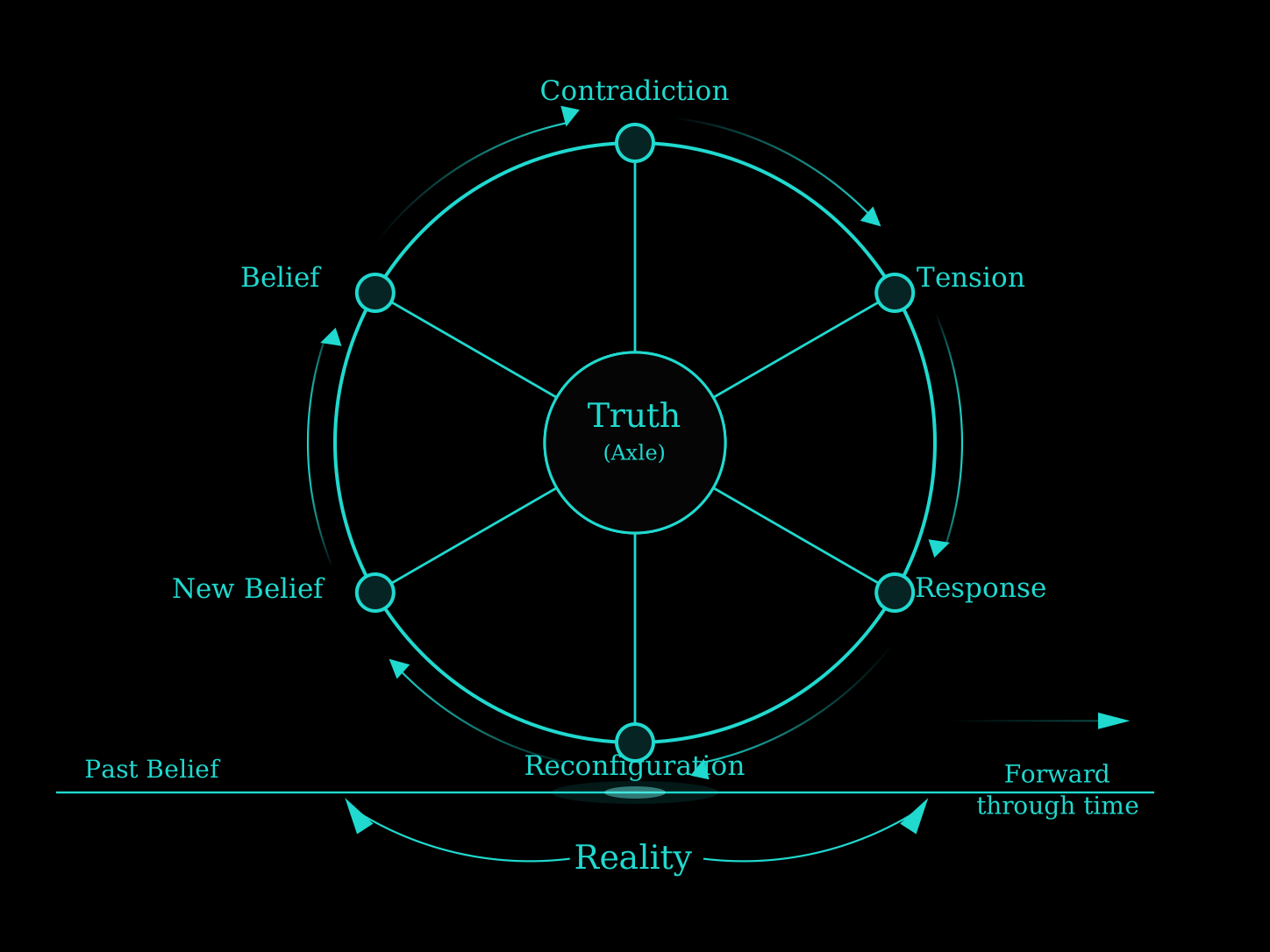
Truth is the axle—not another stage in the process, and not a claim that we possess final truth, but the reference toward which the process is oriented. Reality is the ground against which beliefs are tested. At any instant, one stage is at the point of contact; as the wheel moves forward, that point of contact changes continuously.
Change is inevitable
With the passage of time—is becomes was. Today’s is will become tomorrow’s was. The question is whether the transition happens through denial, erosion, rupture, or conscious revision. This is where is can become was: “I believe” becomes “I believed”; the structure reconfigures rather than merely defending itself. Change is inevitable; conscious reconfiguration is a choice.
Inquiries
These questions can provide clarity about responding to change:
- How did the need for change arise?
- Am I acting with integrity?
- Am I aligning with reality or defending identity?
- What or who will this change affect?
- Can I embrace this change?
- What change is possible?
- What might I still not see?
How This Fits With Fractegrity
The wheel describes the process of interrupting belief perseverance through time. Fractegrity provides seven lenses through which that process can be examined across scale and context.
- Person — redefining beliefs after tension
- Group — replacing old beliefs with new beliefs
- Institution — creating systems with new beliefs
- Culture — moving forward without erasing history so that patterns can be revealed
Cognitive dissonance is a small crucible. Something must give: the belief, the interpretation of the evidence, the source’s credibility, or sometimes one’s sense of identity. Growth occurs when the tension becomes an opening for reorganization through change rather than merely a threat to be suppressed.
Next threads to pull:
One: Why Should I Care About Patterns?
Two: Why Should I Care About Integrity?
Three: Why should I Care About Accountability?
Four: Why Should I Care About Alignment?