Why Should I Care About Balance?
Care makes room for competing needs and tensions without demanding that one side simply defeat the other. It supports the capacity to hold tension long enough to discover a more coherent configuration.
Tension → Balance
Healthy cognition needs both stability and adaptability; too much rigidity turns durability into impermeability and leaves the structure vulnerable to fracture. Balance is the capacity to hold that tension long enough for meaningful response and reconfiguration to occur.
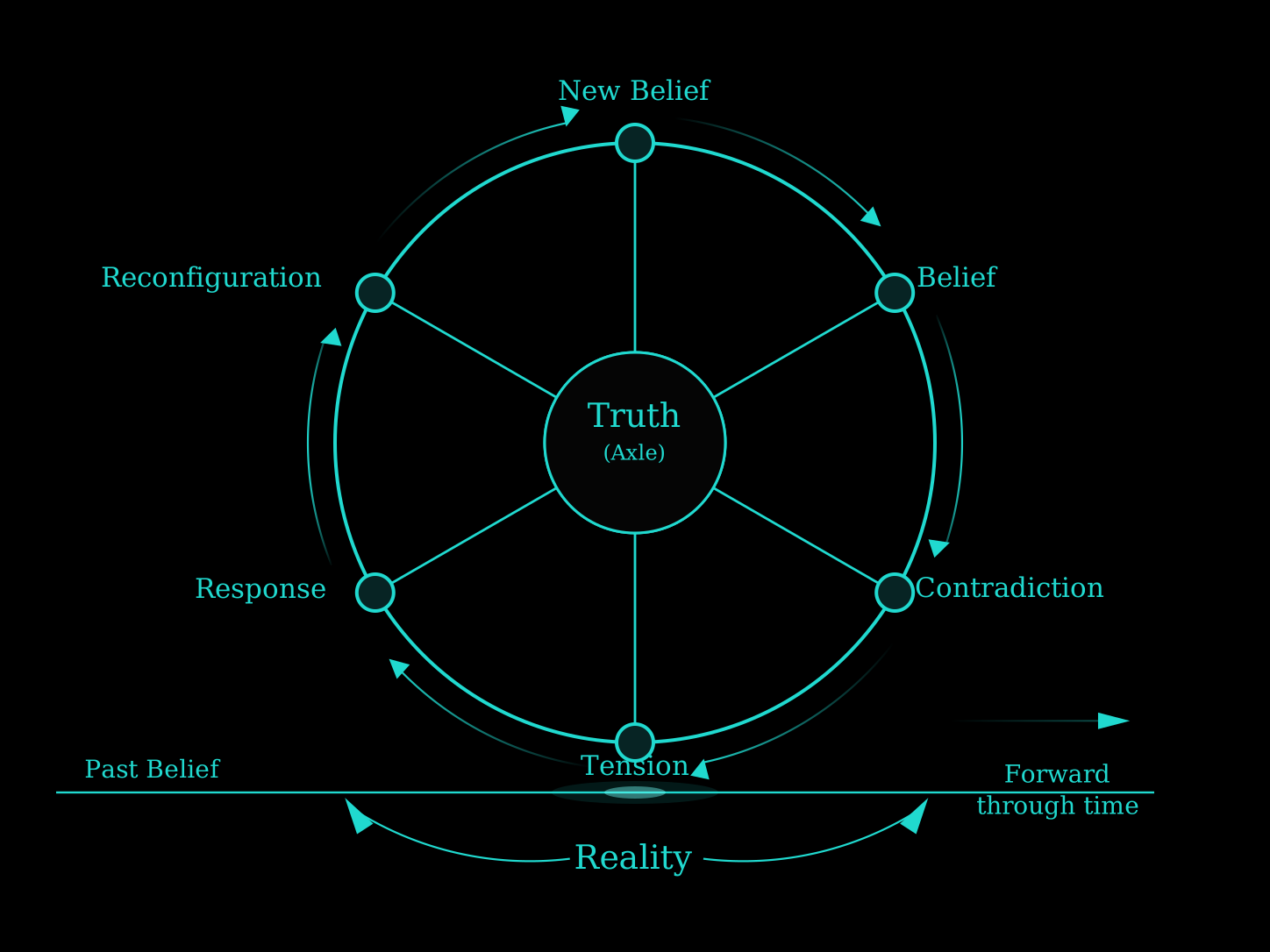
At the stage of Tension, one could ask: Am I tolerating the tension or escaping it? Contradiction produces tension. A healthy structure neither collapses under that tension nor becomes so rigid that it cannot respond.
Care as a Weave
Care has two interwoven forms. One is care as nourishment: attention, tending, patience, protection, and conditions for growth. The other is care as enacted value: values are not merely propositions we assent to; their meaning becomes visible in response, choice, restraint, responsibility, and action. Neither form is sufficient by itself. Nourishment without values can become indiscriminate preservation—sustaining a structure simply because it exists. Values without nourishment can become abstraction or severity—declaring what matters without creating the conditions in which it can actually be lived.
How to Read the Wheel
Truth is the axle—not another stage in the process, and not a claim that we possess final truth, but the reference toward which the process is oriented. Reality is the ground against which beliefs are tested. At any instant, one stage is at the point of contact; as the wheel moves forward, that point of contact changes continuously.
With balance, some perseverance is necessary. We could not function if every new claim immediately overturned our worldview. Healthy cognition requires both stability and adaptability. The problem is not having durable beliefs; it is becoming so rigid that durability becomes impermeability.
What ideally happens when reality pulls against what I believe? I tolerate the tension without either collapsing or becoming rigid.
Inquiries
These questions can clarify the tension that occurs with contradiction:
- What tensions sustain this contradiction?
- Am I acting with integrity?
- Am I aligning with reality or defending identity?
- Can I tolerate this tension?
- What change is possible?
- What might I still not see?
How This Fits With Fractegrity
The wheel describes the process of interrupting belief perseverance through time. Fractegrity provides seven lenses through which that process can be examined across scale and context.
- Person — holding beliefs and limitation together
- Group — gathering evidence amid difference
- Institution — systems that flex to accept evidence without losing integrity
- Culture — narratives that allow beliefs to be revised without sacrificing continuity
Balance is the capacity to hold that tension long enough for meaningful response and reconfiguration to occur. This is responsive stability: incorporating change in response to evidence without losing coherence.
Next threads to pull:
One: Why Should I Care About Patterns?
Two: Why Should I Care About Integrity?
Three: Why should I Care About Accountability?
Four: Why Should I Care About Alignment?