
The Difference Between Finishing and Continuing
Across all of these pairs, one pattern repeats:
- Finishing seeks completion, control, or appearance
- Continuing seeks flow, responsiveness, or care
These contrasts are not moral binaries. They describe how a system relates to time, strain, and responsibility. One side tries to finish reality. The other tries to stay with it.
Performance wants to arrive. It wants the moment to close cleanly, the gesture to land, the judgment to be made. Work—true work—does not arrive. It remains. Performance asks how something looks. Attentive making asks whether something holds.
Perfection belongs to stillness. It freezes a moment and calls it complete. But life does not stay where perfection leaves it. It moves on. What lasts is transitory—not because it is weak, but because it is willing to pass through time instead of resisting it.
Contrast Between Finishing and Continuing
Here are some differences between finishing and continuing:
- Zero wants certainty. Infinity refuses containment. Zero draws a hard boundary and says, nothing more. Infinity answers, not finished yet.
- Static systems demand preservation. Dynamic systems demand participation. The static asks for loyalty to form. The dynamic asks for fidelity to function.
- A singular act can be impressive. An iterative act can be sustaining. Singular solutions end conversations. Iterative solutions keep listening.
- To ignore is to sever continuity. To repair is to re-enter relationship. Ignore says, this no longer concerns me. Repair says, this still belongs.
- Interruption treats disruption as nuisance. Continuity treats it as signal. An interruption ends a story. Continuity absorbs it and keeps going—changed, but intact.
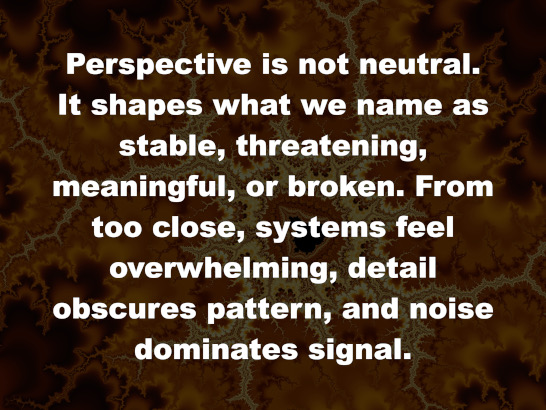
The Impact of Prematurely Finishing
Dismissiveness closes the door quickly. Accountability stays in the room longer than comfort allows. Dismissiveness protects the self. Accountability protects the system. One withdraws attention. The other redistributes load. What unites these contrasts is not optimism versus pessimism, nor strictness versus softness. It is the difference between wanting to be done and being willing to continue.
Static systems demand preservation. Dynamic systems demand participation. The static asks for loyalty to form. The dynamic asks for fidelity to function.
A singular act can be impressive. An iterative act can be sustaining. Singular solutions end conversations. Iterative solutions keep listening.
To ignore is to sever continuity. To repair is to re-enter relationship. Ignore says, this no longer concerns me. Repair says, this still belongs.
Interruption treats disruption as nuisance. Continuity treats it as signal. An interruption ends a story. Continuity absorbs it and keeps going—changed, but intact.
Dismissiveness closes the door quickly. Accountability stays in the room longer than comfort allows. Dismissiveness protects the self. Accountability protects the system. One withdraws attention. The other redistributes load.
What unites these contrasts is not optimism versus pessimism, nor strictness versus softness. It is the difference between wanting to be doneand being willing to continue.
The Timelessness of Integrity
Integrity does not live in completion. It lives in care across time. It is not found in the flawless moment, but in the sustained willingness to notice strain, respond honestly, and keep shaping what must carry life forward. Not perfect. Not finished. Still working. Still accountable. Still here.
Many of the challenges now confronting human systems share a defining trait: they cannot be finished. Climate change is not a problem that will be solved and set aside. Ecological repair has no final checkbox. Sustainability does not arrive at a permanent state of balance. These conditions unsettle cultures trained to seek completion—projects with endpoints, victories with closure, solutions meant to remain solved.
Modern systems are deeply shaped by completion logic:
- problems are framed to be solved
- progress is measured by milestones reached
- effort is justified by outcomes achieved
This instinct has produced extraordinary accomplishments. But when applied to living systems—climates, ecosystems, societies—it becomes misleading. Living systems do not stabilize permanently. They adapt, degrade, regenerate, and respond. Seeking completion where only stewardship is possible creates frustration, denial, or exhaustion.
The danger is not that problems remain unfinished. The danger is believing unfinished means meaningless.
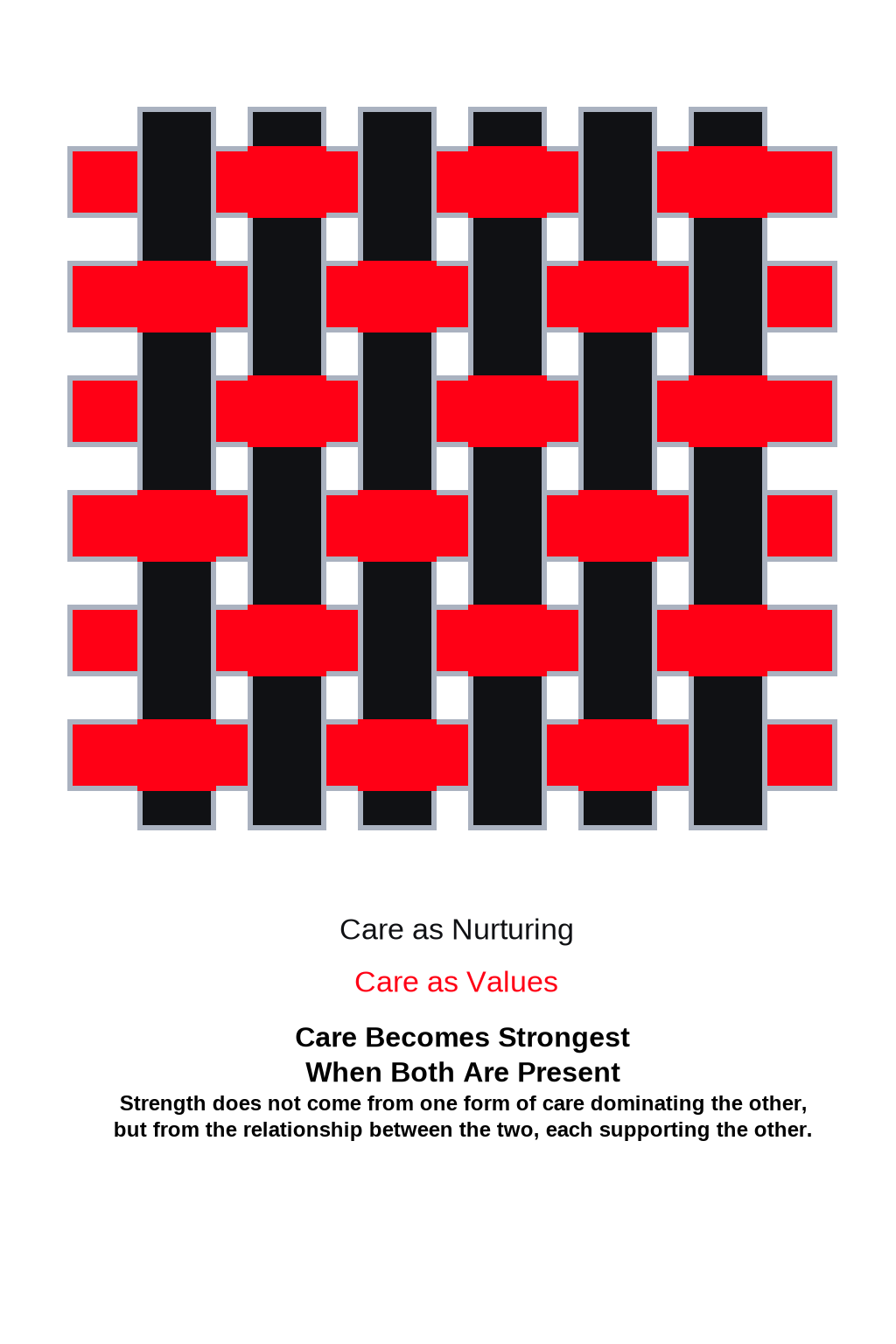
The Dynamics of Sustainability
Sustainability is often framed as a destination: a future state where damage has been repaired, emissions stabilized, systems balanced. While such goals matter, they obscure a deeper truth. Sustainability is not a final condition. It is an ongoing practice of staying within limits while continuing to live. To sustain is not to fix once. It is to attend continuously. Sustainability itself must be sustainable.
This reframes responsibility. The question shifts from “Will we solve this?” to “How will we live responsibly within this?”
Climate change exposes the limits of completion thinking more starkly than almost any other issue. Even the most optimistic scenarios do not return the world to what it was. Some changes are irreversible on human timescales. Others will continue unfolding long after current actors are gone.
This reality provokes despair only if meaning is tied to reversal or victory. If meaning requires completion, then partial success feels like failure. If responsibility requires certainty, then action feels futile.
Meaning without completion offers another stance:
- acting to reduce harm even when harm cannot be eliminated
- preserving conditions for life without promising restoration
- choosing care without guaranteeing outcomes
This is not resignation. It is maturity. Climate change confronts humanity not with a problem to finish, but with a relationship that must be tended across generations.
Stewardship differs from problem-solving in a crucial way. Problem-solving aims to end a condition. Stewardship accepts continuity. It asks:
- What must be tended rather than resolved?
- What harms can be reduced even if they cannot be erased?
- What futures can be protected without claiming control?
In ecological terms, stewardship recognizes thresholds, feedback loops, and long horizons. It resists both panic and complacency. It does not require heroic certainty—only sustained attention.
Meaning without completion does not postpone value until success arrives. It locates meaning in:
- restraint chosen despite pressure
- care extended without guarantee of reward
- responsibility maintained across generations
- orientation held even when progress is uneven
In this sense, sustainability is not merely technical. It is ethical, cultural, and relational—an expression of responsibility rather than a metric. It is the choice to remain accountable to life that continues beyond one’s own timeline.
Similarity Across Scales
- Individual: Shifting personal effort from performative perfection or “wanting to be done” to ongoing self-reflection, craft fidelity, and sustained attention—choosing to stay in relationship with reality rather than freezing a moment and calling it complete.
- Relational: Tending trust and communication as an iterative, living practice rather than seeking final win/lose resolution—treating interpersonal disruptions as signals for repair rather than reasons to dismiss or ignore.
- Institutional: Designing organizational workflows, governance protocols, and post-mortems for continuous stewardship, adaptation, and load redistribution rather than static compliance metrics, artificial deadlines, or superficial appearance.
- Societal: Approaching grand systemic challenges (such as ecological repair, climate stewardship, and democratic continuity) as intergenerational commitments that cannot be “solved and checked off,” but must be faithfully tended across time.
Relationship to Other Ideas Within Fractegrity
- Relationship to Meaning Without Completion: Both reframe sustainability and ethics around ongoing stewardship in an unfinished world, releasing the false requirement that action, value, or responsibility must wait for final resolution or total closure.
- Relationship to Integrity and Workmanship (Craft vs. Performance): Integrity lives in craft fidelity and care across time rather than moral performance or surface appearance; craft stays in relationship with strain and continuously adjusts so the structure holds.
- Relationship to Responsibility Beyond Success (Intergenerational Ethics): Extends care beyond short-term milestones or individual timelines, taking responsibility for futures that cannot be completed or witnessed within a single lifetime.
- Relationship to Infinity Without Escape: Contextualizes finitude within an infinite horizon—refusing the “zero” of rigid containment while remaining grounded in actionable care rather than abstract escape.
Next Threads to Pull:
Meaning Without Completion: Sustainability in an Unfinished World
Explores how to find purpose and maintain commitment in an open-ended, evolving universe.
Beyond: An Orientation, Not a Destination
Reframes the unknown not as an endpoint, but as an ongoing orientation for continuous learning.
Why Should I Care About Alignment?
Highlights why aligning internal vision with daily practice prevents friction and systemic burnout.
Some work cannot be finished. Some damage cannot be undone. Some futures will remain uncertain no matter how carefully we act. Meaning does not wait for resolution. It lives in how we show up inside what remains unfinished. Sustainability is not the promise that everything will be saved. It is the commitment to act as though what remains matters anyway. In an unfinished world, meaning is not what we complete. It is what we refuse to abandon.