Introduction to the Responsibility Hub: Stewardship Without Condemnation
The Responsibility Hub reframes accountability away from punitive judgment, public shame, and moral condemnation, establishing it as active structural stewardship. In Fractegrity, accountability is not a stick used to punish error; it is a vital feedback channel that keeps living systems coherent under load.
When accountability is coupled with condemnation, systems hide mistakes, sever feedback loops, and accelerate brittle failure. True responsibility creates safe, non-condemnatory spaces for truth-telling, structural repair, and continuous learning.
Why Should I Care About Accountability?
Care transforms accountability from punishment into responsibility, repair, and learning. It does not eliminate consequences; it gives them purpose beyond retribution.
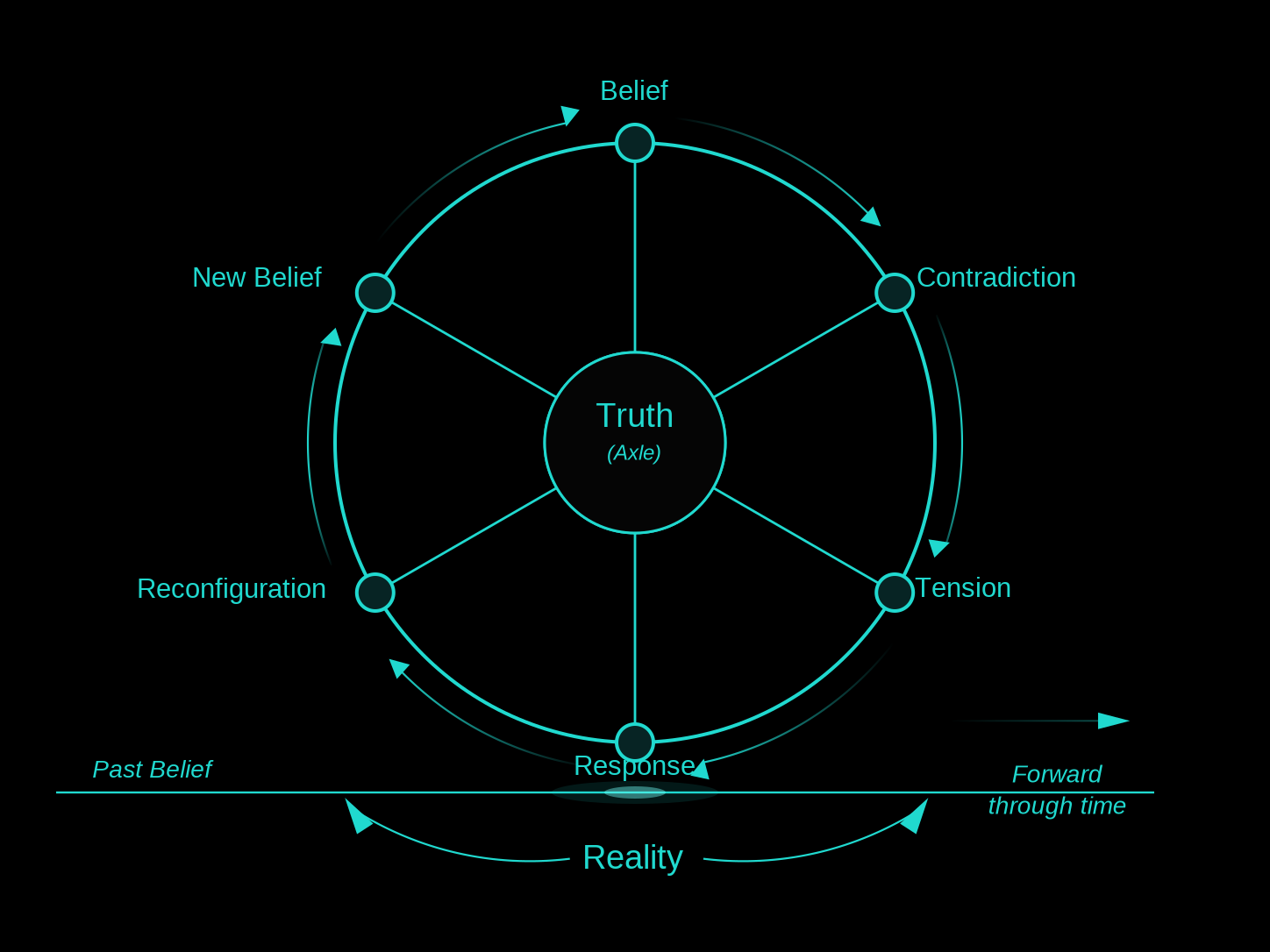
Response → Accountability
Accountability is where evidence must be either admitted or refused. Evidence is feedback; accountability permits something outside the self or system to reveal error and require response.
Evidence provides a feedback mechanism, and refusing evidence is, in a sense, refusing feedback. Accountability means allowing information outside ourselves to alter the structure inside ourselves.
What happens when reality pulls against what I believe?
Response is where professed values become as-lived values. Now that I know, what will I do?
Inquiries
Accountability — what supports it? These questions can clarify accountability:
- Am I acting with responsibility and integrity?
- Am I aligning with reality or defending identity?
- Who or what am I accountable to?
- What change is possible?
- What might I still not see?
- What evidence am I accepting or avoiding?
Similarity Across Scales
- Micro (Individual Scale): Responsibility is personal stewardship—owning one’s choices, honoring commitments, and treating errors as diagnostic feedback for growth.
- Meso (Organizational Scale): Responsibility manifests as non-punitive error reporting, shared accountability structures, and psychological safety within teams.
- Macro (Societal Scale): Responsibility operates as restorative justice, intergenerational ethics, and institutional transparency that protects collective wellbeing.
Relationship to Other Ideas Within Fractegrity
- Relationship to Tensegrity: Responsibility distributes load across a network. No single node carries all blame; tension is held collectively to maintain system balance.
- Relationship to Recursive Learning: Accountability fuels recursion. By examining failure without condemnation, systems learn, iterate, and refine their structure over time.
- Relationship to Refusal & Constraint: Stewardship requires setting clear boundaries. True responsibility includes the courage to refuse commitments that violate core integrity.
Next Threads to Pull:
Accountability Without Condemnation
Deconstructs condemnation as a shortcut that damages systems, establishing accountability as restorative feedback.
Questions About Accountability
Explores fundamental inquiries around implicit promises, mutual trust, and systemic expectations across human organizations.
Responsibility and Accountability: An Inseparable Pair & Directional Orientation
Weaves personal responsibility together with social accountability to create resilient human feedback loops.
Accountability can be seen as a geometry of promise—how commitments are made durable without becoming harsh, how refusal can be responsibility, and how responsibility can extend beyond success, applause, or completion. It invites inquiry over certainty and care over control—so responsibility remains human while consequences remain real.