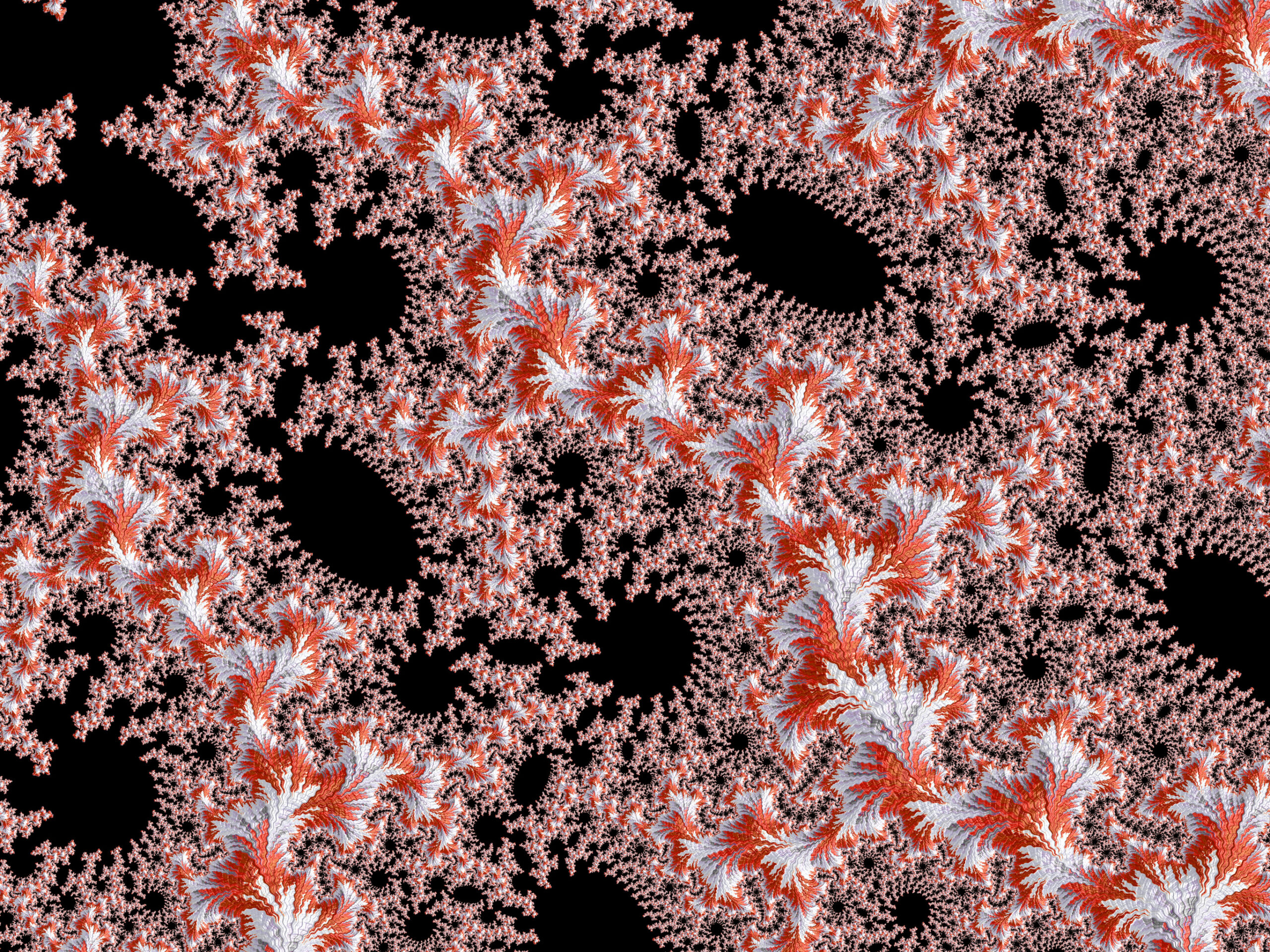
The Allegory of the Still Point & The Recursion of Facing Mirrors
The Allegory of the Still Point
There is a village built at the edge of a great recursive forest — a place where every path split into two, then two more, then two more, endlessly. Wanderers who entered the forest often returned days later with wild stories: trees that mirrored other trees, echoes that returned before they were made, footsteps that seemed to walk ahead of the walker. Some never returned at all, lost in loops of their own making. The villagers called this place The Forest of Iterations. They feared it. But they also depended on it. For deep inside, it was said, lived the Still Point — a place where one could see themselves clearly, without distortion.
The Wanderers
Every few years someone, driven by restlessness or confusion or the quiet ache of unanswered questions, would walk into the forest. Most wandered the familiar loops — the paths where one thought the same thoughts again and again, rehearsed the same fears, replayed the same memories. The forest obliged them by growing those paths thicker and thicker, until each loop formed a sort of mental roundabout. Familiar. Predictable. Exhausting. It wasn’t insanity that trapped them. It was familiarity pretending to be truth.
The Fractal Stream
One day, a wanderer named Liora stepped into the forest with a single intent: not to escape her loops, but to understand them. She noticed that each path she took repeated itself with slight variation — a branch a little higher, a stone a little darker, a breeze that carried a different scent. The forest wasn’t punishing her with repetition. It was testing all possible versions of her response. She followed a stream whose waters moved in a peculiar way: the ripples replicated themselves at every scale, fractal upon fractal, endlessly iterating. And yet—despite the infinite motion—the shape of the water’s flow never changed. It was motion without madness. Change without deviation. A living equation. She realized: This stream was a fixed point in motion.
The Definition of Sanity
At last, Liora came to a clearing where everything fell silent. No echoes. No branching. No infinite mirrors. Just a small pool of water — perfectly still. She knelt beside it and saw her reflection not as she wished to be, nor as she feared to be, but as she simply was. No distortions, no recursions, no endless loops of thought calling for correction. This, she understood, was the Still Point — the fixed point at the center of all the iterations of her life. And in that moment she understood the secret of the forest:
- Insanity was not the repetition. It was repeating without awareness.
- Sanity was a fixed point — the moment when the input and output of the self finally matched.
- Truth was the place where iteration ceased not because motion ended, but because the pattern recognized itself.
This was the paradox: The Still Point did not mark the end of recursion. It was the one place from which recursion could begin anew without distortion.
The Return
When Liora returned to the village, she spoke of the Still Point, but not as a place. She called it a practice. A discipline. A moment when life’s endlessly iterating circumstances reflect back exactly who you are — not the illusions within loops, not the fears that branch and multiply, but the clear, quiet invariance at your core.
“Find the place,” she said, “where the next iteration equals the last. Where the equation of you stops changing. That is not stagnation. That is truth.”
The Lesson
And so the villagers learned:
Fixed points are not where recursion dies. They are where it becomes meaningful. They are the sanity inside the infinite. The clarity inside the complexity. The moment recursion becomes revelation.
The Recursion of Facing Mirrors
Imagine two mirrors facing each other.
At first glance, they seem like opposites —
one here, one there, each claiming to hold the “true” reflection.
But the moment they face each other, a deeper truth awakens.
Between them blooms an infinite corridor:
a tunnel of worlds within worlds,
each reflection containing the next,
each horizon birthing another horizon.
This is recursion made visible.
And yet —
in that endless corridor,
every image grows smaller, softer, less distinct.
Eventually the reflections fade into a vanishing point
where distinction dissolves and only the idea of the reflection remains.
This is infinity made visible.
The paradox is beautiful:
Each mirror insists on showing the other,
yet neither can ever show the whole.
Each reflection is true,
yet each is incomplete.
The corridor appears infinite,
yet it is made from two simple planes facing each other.
Recursion creates infinity,
but it starts with two ordinary surfaces.
And the deepest lesson:
The infinite corridor is not “out there.”
It is born from relationship.
It is the space between that holds the endlessness.
Just as:
consciousness reflects experience, which reflects consciousness
thought reflects memory, which reflects thought
the self reflects the world, and the world reflects the self
Every reflection is a smaller echo of a bigger truth.
Every echo is a reminder that infinity does not require vastness —
only alignment.
Two mirrors.
One facing another.
A recursive universe unfolding in the space between.
Similarity Across Scales
- Individual — finding the inner still point where self-reflection matches true essence
- Relational — using interpersonal relationships as clean mirrors for mutual discovery
- Institutional — creating reflective evaluation mechanisms that eliminate organizational distortion
- Societal — recognizing that human culture and natural reality mirror each other endlessly
Relationship to Other Ideas Within Fractegrity
- The Still Point / Fixed Point — provides the sanctuary from which recursion begins without distortion
- Recursion / Infinite Corridor — shows that infinity is generated through relational alignment
- Integrity / Unbroken Mirror — reflects truth without defensive distortion
Next Threads to Pull:
The Still Point on the Infinite Loop: Renewal and Refinement
Locates the center of stillness within continuous recursive loops where integration and renewal occur.
It’s Fractals All the Way Down: A Geometry of Wonder & Mandelbrot Discovery
Traces the history and beauty of fractal geometry from Benoit Mandelbrot to modern complexity theory.
Integrity, Recursion, and Learning: How Wholeness Is Refined Through Repetition
Demonstrates how recursive feedback loops continuously refine and strengthen structural wholeness over time.
In the Forest of Iterations, wanderers become trapped in familiar thoughts, fears, and memories. The story suggests that repetition becomes a trap when it happens without awareness. Liora discovers a quiet center where she can see herself without fear or wishful distortion. This fixed point is not an end to change, but a grounded place from which new cycles can begin.
Two mirrors create an endless corridor of reflections, though each image is partial and eventually fades. The poem uses this image to show how infinity can emerge from the space between simple, aligned surfaces. Mirror imagery occurs across scales: people reflect on themselves, learn through relationships, and shape institutions and cultures through feedback. Clear reflection can reveal shared patterns while reducing distortion.
The Still Point offers a foundation for recursion, while the facing mirrors show how repetition can generate new perspectives. Together, they frame integrity as the ability to reflect truthfully and learn without losing wholeness.