The Three-Phase Metamorphosis of Systemic Breakdown: Exposure, Domestication, Formalization
When pressure becomes transformation
A crucible is a vessel built to withstand extreme heat — not to destroy what it holds, but to make transformation possible without collapse. Heat alone does not refine. Containment does. The fractal crucible (fracrucible) names the conditions under which pressure becomes productive rather than destructive. It is not an event. It is a process — one that allows stress, disruption, and uncertainty to do their work without shattering what must be preserved.
Pressure Is Not the Problem
Pressure is often feared because it exposes weakness. It removes comfort. It accelerates consequence. Under pressure, systems are stripped of excess and forced to rely on what is truly structural. Pressure does not create misalignment. It exposes what was already there. Nor does pressure automatically destroy. Destruction occurs when systems encounter pressure without containment, care, or orientation.
The Three-Phase Metamorphosis of Systemic Breakdown: Exposure, Domestication, Formalization
When environmental stress overwhelms standard filtering mechanisms, a system enters what the Fractegrity framework designates as the fracrucible (the fractal crucible)—a scale-invariant agent of change and catalyst for transformation.
Rather than treating systemic breakdown as damage to be erased, an adaptive system utilizes the crucible to execute a three-phase structural metamorphosis.
Exposure, Domestication, and Formalization.
Phase 1: Exposure (Revealing the Hidden Boundary)
Under steady-state conditions, a system’s internal boundaries, structural assumptions, and design limits remain completely invisible to observers. When the system is bombarded with high-entropy noise or driven past its operational parameters, its standard output mechanism fails. The system stops producing its conventional payload and begins generating raw friction, glitches, and structural errors. This breakdown exposes the underlying “skeleton” or hidden limits of the system itself.
Phase 2: Domestication (Holding Tension Without Snapping)
Traditional, rigid operators respond to exposure with panic, attempting to force the system back into its original configuration or severing the feedback loop entirely. In contrast, an adaptive operator engages in domestication by ceasing to fight the disruption. The operator studies the internal logic of the breakdown, learning how to hold systemic tension safely without causing the structure to snap.
A classic physical example of domestication occurs in acoustic engineering through the performance innovations of Jimi Hendrix. In mid-20th-century music, audio amplifier distortion and microphonic feedback were classified as catastrophic equipment failures—unwanted physical noise. Rather than stepping away from his amplifiers to suppress the screech, Hendrix manipulated his physical distance, body angle, and guitar string tension relative to the amplifier speaker. By routing runaway acoustic energy back through his instrument in a controlled feedback loop, he domesticated physical noise, transforming chaotic screech into sustained, expressive musical signals.
Phase 3: Formalization (Codifying Noise into Signal)
In the final phase, the domesticated error is given a new architectural rule set, rhythm, or formal framework. The accidental glitch or disruption is codified into a deliberate, repeatable signal, establishing an entirely new operational paradigm. As philosopher Michel Serres observed, parasitic noise within a system is the true driver of evolution; a system transmitting only clean, predictable signals remains static and sterile.
Through this three-phase metamorphosis, systemic breakdown becomes a breakthrough. The system does not merely recover; it evolves into a higher-order structure that its original engineers or designers never anticipated.
| Domain | Operational Breakdown (Exposure) | Domestication Strategy | Formalized Paradigm |
|---|---|---|---|
| Acoustic Performance | Amplifier microphonic feedback and string distortion treated as hardware failure. | Jimi Hendrix adjusted physical stance, body angle, and string tension to control runaway energy. | Modern rock guitar technique and intentional audio feedback aesthetics. |
| Auditory & Digital Media | Vinyl turntable needle forced backward against linear mechanical playback. | Grandmaster Flash and early DJ pioneers treated physical vinyl friction as a percussive instrument. | Hip-Hop culture and the formal musical instrument of turntablism. |
| Software & Visual Art | Corrupted binary file formats, frame rate lag, and digital compression artifacts. | Visual artists deliberately manipulated binary code and datamoshed video files to expose file structures. | Glitch Art movement, establishing the digital cyberpunk aesthetic. |
| Physical Architecture | Instability, geometric asymmetry, and structural fragmentation breaking traditional harmony. | Frank Gehry and Zaha Hadid designed structural frames capable of safely supporting non-rectilinear shapes. | Deconstructivist Architecture, creating fluid, dynamically chaotic building forms. |
What Makes a Crucible Fractal
- In fractal systems, the same pattern repeats across scale. A fractal crucible exists wherever:
- stress is present
- coherence is still tended
- limits are respected
- listening remains possible
This pattern appears:
- in individuals undergoing identity change
- in relationships navigating rupture and repair
- in institutions facing reform
- in societies under ecological or moral strain
The shape of the crucible changes. The function does not.
The Difference Between Fire and Fracture
Fire transforms. Fracture separates. The difference lies not in intensity, but in structure. When pressure is met with:
- urgency instead of orientation
- control instead of care
- speed instead of sequencing
production instead of preservation
fire becomes destructive. When pressure is held within:
- clear boundaries
shared purpose - reversible movement
- attentiveness to strain
fire becomes refining.
What Survives the Fractal Crucible
The fractal crucible does not preserve everything. It preserves what has integrity and is structurally sound. What often survives is:
- integrity over image
- relationship over role
- meaning over metric
- orientation over habit
What often falls away:
- brittle assumptions
- excess complexity
- false coherence
- unsustainable pace
Loss within a crucible is not failure. It is process, change and differentiation.
The Role of Care in the Fractal Crucible
Care is what keeps the vessel intact. Without care:
- pressure concentrates
- fatigue accumulates invisibly
- feedback shuts down
- collapse becomes likely
Care distributes load and keeps communication open. It allows the system to remain responsive even when stressed. Care does not reduce heat. It makes heat survivable.
Emergence, Not Replacement
The fractal crucible does not force outcomes. It creates conditions. What emerges after pressure is rarely what was planned — but it is usually more honest with greater integrity. Change that passes through a crucible carries memory. It knows what it cost. It is less likely to repeat what failed. Transformation that emerges this way is quieter — and more durable.
Change as Signal announces entry into the crucible. Resistance shapes its boundaries. Adaptive Change governs movement within it. Care holds the vessel. Preservation determines what must remain. Responsibility Under Constraint guides choice under heat. The fractal crucible is where all of these converge.
Similarity Across Scales
- Individual — exposing personal limits, holding the vulnerability, and establishing new habits
- Relational — acknowledging relational fracture, exploring causes safely, and codifying new agreements
- Institutional — uncovering operational failure, testing sandbox fixes, and formalizing updated SOPs
- Societal — facing systemic crisis, experimenting with community models, and enacting new legislation
Relationship to Other Ideas Within Fractegrity
- Non-Brittle Error Channels / Governance — provides structural sandboxes for error processing
- Recursive Learning / Refinement — turns breakdown into stored pattern-memory
- Integrity / Structural Soundness — ensures the system remains whole throughout metamorphosis
Next Threads to Pull:
Intro Change
Introduces systemic change mechanics, crisis dynamics, and transformational adaptation.
Orientation After Systemic Shift & Under Pressure
Offers strategies for recalibrating purpose and direction following major disruption or crisis.
The Phoenix and the Crucible: Two Faces of Transformation
Examines destruction (the crucible) and rebirth (the phoenix) as twin dynamics of systemic metamorphosis.
Pressure becomes productive through the fracrucible, a process of exposure, domestication, and formalization that transforms systemic breakdown into a higher-order structure. Under high-entropy stress, a system’s hidden boundaries and design limits are revealed as its normal outputs falter, exposing the underlying skeleton of the system. Adaptive operators study the disruption’s internal logic and learn to hold tension safely; a classic example is Hendrix’s controlled feedback loop transforming noise into musical signal. The domesticated error is given a new architectural rule set, turning a disruption into a deliberate, repeatable signal and enabling a new operational paradigm. Care keeps the vessel intact and allows heat to be survivable; what survives emphasizes integrity, relationship, and meaning over image, while loss signifies process and differentiation.
Chaos as Catalyst
The Crucible of Now
The world is trembling again— not from one event, but from the weight of all of them. Floods, fires, lies, reckonings — each a spark in the wider furnace where our shared assumptions smolder. We stand in the heat of contradiction: connection at our fingertips, yet loneliness in our hearts; information overflowing, yet wisdom running thin. It feels unbearable, as every crucible must. The old metals of certainty are melting into doubt — our institutions, our myths of progress, even our sense of “us.” But perhaps this too is necessary: the breaking of brittle alloys that could not bear the strain of truth. In the glare of upheaval, we begin to see the impurities that long hid in the gleam of convenience — how comfort dulled conscience, how speed eroded empathy, how profit outshouted purpose. And yet — beneath the chaos — there is movement. Not destruction, but reaction. New bonds forming in the molten swirl: people re-learning to listen, to tend, to notice. Small acts shimmer amid the ash — neighbors rebuilding after storms, artists turning grief into lanterns, youth speaking truth to power with a steadiness older than their years. The crucible of now is fierce, but fire refines what stone cannot.
Perhaps our systems must melt for our souls to fuse. The promise is not in returning to what once was — but in forging what could yet be: a culture tempered by awareness, welded by empathy, polished by humility. And when this heat has done its work, we may find ourselves ringing truer — a species more attuned to the fragile harmony of the whole. For this, too, is how life evolves: through the crucible of crisis, each era shedding its excess, each generation asked the same question— not “Will you endure the fire?” but “What will you become because of it?”
Prelude
At first, it feels like collapse. Institutions splinter, trust thins, and the ground beneath certainty liquefies. Each headline is a flare in the darkness — burning, blinding, fleeting. But step back, and you see the wider geometry: the turbulence is not random — it is recursive. Each shockwave echoes a smaller one, each fracture mirrors another, each pattern of division reveals the same yearning for wholeness. This is not the end; it is the the fractal crucible of our age.
I. The Heat of Disintegration
We live in the furnace of too much — too much noise, too much speed, too little stillness. Our cultural alloys — power, progress, profit— are glowing red with strain. The crucible is heating, not to punish, but to purify. False metals of ego and fear bubble to the surface, and we are left to decide: skim them away, or call them our reflection? Each outrage, each echo chamber, each shouted certainty is part of the same alchemy. The world is not breaking apart — it is breaking open.
II. The Pattern Within the Flame
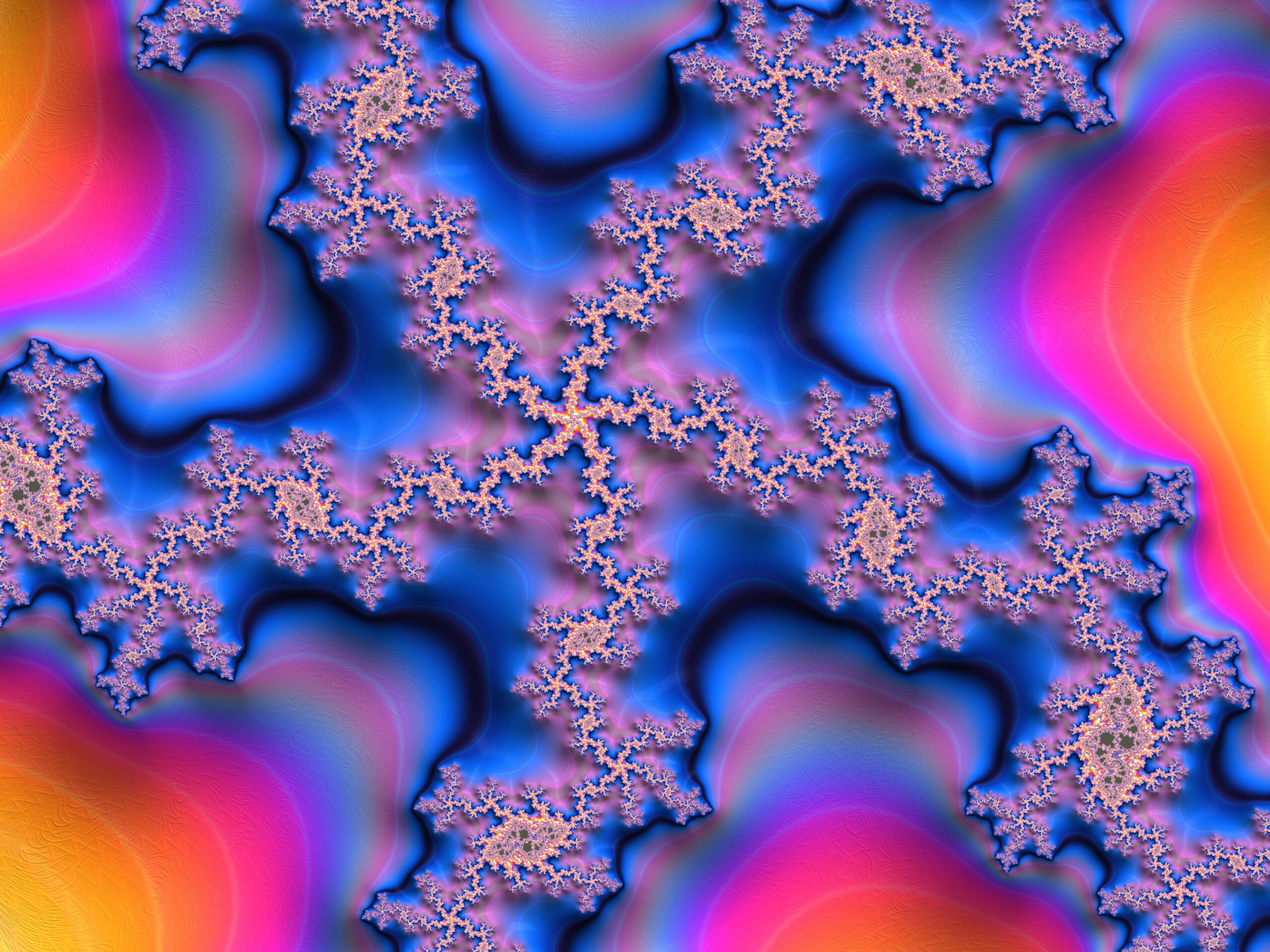
Look closer, and the chaos begins to hum with pattern. Protest and compassion, fear and forgiveness — they spiral like opposites in a Mandelbrot bloom. Every pixel of upheaval contains the seed of awareness. From local communities to global movements, tiny self-similar gestures appear: a kindness repeated, a truth spoken, a connection restored.
Fractegrity — the tensile balance between the individual and the collective — emerges not from perfection, but from participation. It is the lattice that forms when each part holds tension for the whole. This is what the fractal crucible teaches: that destruction and creation are merely different temperatures of the same process.
III. The Cooling into Clarity
When the heat subsides— and it will — something new will gleam from the ash: a culture more porous, a truth more collective, a self more transparent to its surroundings. We will have learned that interdependence is not idealism, but physics; that empathy is not weakness, but tensile strength. From this fractal crucible, we might emerge aligned — each of us a reflective facet of a vast mosaic of becoming.
The fractal crucible does not promise comfort. It promises coherence. It whispers: “You are being refined, not erased. The world’s turmoil is your mirror, and from this shared heat a truer pattern will crystallize.” And perhaps, when the next tremor comes, we will recognize it not as chaos, but as resonance — the music of the world re-tuning itself toward wholeness.
Similarity Across Scales
- Individual — reframing personal crisis as a refining process rather than self-destruction
- Relational — holding interpersonal tension safely to allow relationship renewal
- Institutional — structuring organizational reform so pressure refines mission without structural fracture
- Societal — navigating cultural turmoil as catalytic information for systemic evolution
Relationship to Other Ideas Within Fractegrity
- Integrity / Structural Soundness — defines what is genuine and survives the heat
- Care / Structural Vessel — provides the load-bearing containment that keeps the vessel intact
- Change as Signal / Information — announces entry into the crucible
Renewal and Purification: Returning to What Is Essential
The phoenix knows the fire by heart —
a pulse that beats beneath its feathers,
a song only ash can understand.
It falls into flame
to remember its wings.
The metal knows the fire by trial —
a furnace roar,
a crucible’s unblinking gaze.
It softens, melts,
and becomes what the world coaxes from its glow.
One burns to return.
One melts to become.
Both learn the alphabet of heat.
Ash rising.
Ore refining.
Memory shifting.
Potential aligning.
Two arcs of the same eternal curve —
the cycle and the spiral,
the renewal and the forging,
the phoenix and the flame-born blade.
And we,
with our hearts of ash
and our bones of ore,
are shaped by both.
The Crucible: A Prelude to Becoming
I. The Precursor — The Quiet Before the Flame
Before the fire, there is always restlessness.
The air thickens with unrealized knowing.
Something beneath the surface trembles—
not yet a quake, but a whisper of imbalance.
The familiar world hums on,
but the melody feels off-key.
Routine dulls the senses;
dreams grow cramped in their cages.
The soul begins to pace,
tracing invisible patterns on the walls of the ordinary—
a geometry of discontent,
a fractal of change preparing to unfold.
It is the moment before a storm,
the intake of breath before confession.
We tell ourselves we are fine,
but deep down, we know: something is about to transform.
II. The Crucible — The Heat of Undoing
Then comes the breaking.
Not by malice,
but by necessity.
A loss, a betrayal, a sudden truth
shakes the scaffolding of the self.
The patterns that once held us safe
turn to molten flux.
This is the crucible—
where ideals are tested,
and every false alloy reveals its weakness.
The heart becomes both furnace and ore.
We resist at first—
clutching shards of the life that was—
but fire is patient.
It waits until we surrender,
until we allow ourselves to melt
into the possibility of something new.
Pain is not the enemy here;
it is the catalyst.
The flame does not destroy—
it distills.
III. The Emergence — The Cooling of Gold
Then, slowly, the fire subsides.
Ash drifts into silence.
What remains is smaller,
but truer.
In the stillness that follows,
we begin to hear the faint ringing
of our refined essence—
stronger, clearer, resonant with purpose.
We no longer seek the life we lost,
for it was never meant to last.
Instead, we tend the embers of wisdom
glowing in the space once called suffering.
And so, from the heat,
new forms emerge:
compassion forged from loss,
clarity born of confusion,
courage crystallized from fear.
The crucible was not a punishment—
it was an invitation.
To transmute pain into perspective,
to remember that even collapse
can be a form of creation.
And as we rise,
we carry the memory of the flame within us—
a quiet, enduring light—
proof that transformation is not only possible,
but inevitable.
Not all pressure is refining. Not all systems are ready for fire. But when containment is strong, care is present, and orientation is clear, pressure does not have to destroy. It can clarify. It can strengthen. It can give rise to forms capable of enduring what came before. It can preserve what matters. The fractal crucible is not where systems are broken. It is where they are made honest.