Navigating Beyond: The Fractal Edge & Known Map
Beyond the Fractal Edge: Where Repetition Gives Way to Emergence
Beyond is not the opposite of structure. It is structure encountering its own limits.
The fractal edge is not crossed all at once. It is approached gradually, through curiosity rather than force. Nothing here asks for certainty. Nothing demands acceleration. Beyond begins as a question held gently: What remains coherent when repetition can no longer guarantee outcome? That is the edge we will explore.
Where repetition gives way to emergence
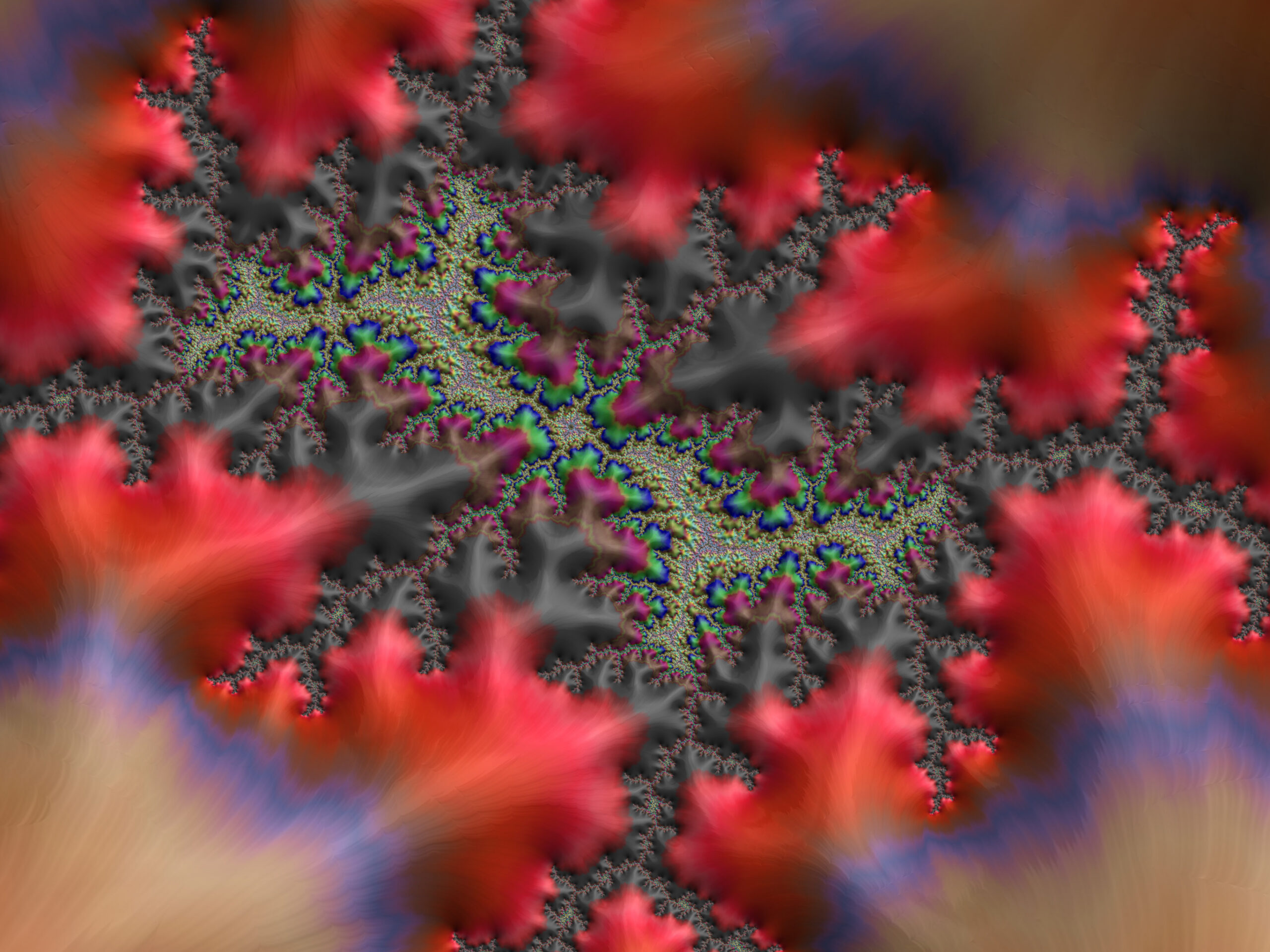
At the boundary of the Mandelbrot set, something remarkable happens. Inside the set, calculations iterate endlessly without diverging. Values remain bounded. Structure persists. What emerges is not chaos, but infinite coherence—self-similar forms unfolding at every scale. The deeper one zooms, the more detail appears. Not repetition, but recursion with variation. Not sameness, but recognition.
Beyond the edge, iterations diverge. Stability gives way to escape. The system no longer holds its shape. The boundary itself—the fractal edge—is where meaning lives.
The Edge Is Not a Line
The fractal edge is not a clean division between order and chaos. It is infinitely complex, richly textured, and never fully resolved. Every magnification reveals new structure. Every iteration deepens pattern. This is where systems are most alive. At the edge:
- stability and instability coexist
- coherence persists without rigidity
- novelty emerges without collapse
The edge is not a failure of structure. It is the limit where structure becomes generative.
Beyond Does Not Mean Outside
To go beyond the fractal edge is not to abandon coherence. It is to move past the illusion that stability requires sameness. Inside the set, iteration continues indefinitely. Beyond the edge, divergence is possible.
But “beyond” does not mean reckless escape. It means engaging regions where:
- orientation must replace certainty
- attention replaces control
- meaning replaces predictability
Beyond is not the opposite of structure. It is structure encountering its own limits.
Self-Similarity as Memory
The Mandelbrot set teaches something subtle: what persists across scale carries memory. Patterns recur not because they are forced, but because they are structurally true. This is why zooming does not exhaust the image. The system remembers itself.
- values that reappear under pressure
- principles that scale from self to society
- integrity that holds across changing contexts
Beyond the fractal edge, memory still matters—but it no longer guarantees form.
- through integrity
- through alignment
- through balance
- through responsibility
- through change and the fractal crucible
Beyond the fractal edge, memory still matters—but it no longer guarantees form.
Beyond begins where coherence is no longer enough by itself—where orientation must be carried without map or metric. This hub explores what happens when:e Mandelbrot set teaches something subtle: what persists across scale carries memory. Patterns recur not because they are forced, but because they are structurally true. This is why zooming does not exhaust the image. The system remembers itself.
In human terms, this looks like:
- values that reappear under pressure
- principles that scale from self to society
- integrity that holds across changing contexts
Interconnected
Every black pixel of the Mandelbrot set touches every other, connected like the network of nerves or veins within the body. What we see on the screen is a digital mirror of biological truth: connection without central command, pattern without imposed design.
Sidebar content
Where Fractegrity Leads
Fractegrity has followed coherence:
- through integrity
- through alignment
- through balance
- through responsibility
- through change and the fractal crucible
Beyond begins where coherence is no longer enough by itself—where orientation must be carried without map or metric. This page explores what happens when:
- self-similarity can no longer guide action alone
- iteration continues without predictable return
- meaning must be sensed rather than proven
Similarity Across Scales
- Individual — navigating personal identity thresholds where habit no longer predicts outcomes
- Relational — sustaining interpersonal trust without rigid relational scripts or guarantees
- Institutional — guiding organizational evolution when precedent no longer fits changing environments
- Societal — steering civilizational transitions where traditional models reach systemic limits
Relationship to Other Ideas Within Fractegrity
- Integrity / Boundary Integrity — anchors wholeness at the edge where familiar forms dissolve
- The Fracrucible / The Fractal Crucible — refines structural elements as iterations encounter stress
- Orientation Without Guarantees / Navigation — provides directional clarity when maps end
Next Threads to Pull:
Beyond: An Orientation, Not a Destination
Reframes the unknown not as an endpoint, but as an ongoing orientation for continuous learning.
Orientation After Systemic Shift & Under Pressure
Offers strategies for recalibrating purpose and direction following major disruption or crisis.
New Territories
Explores newly emerging domains of thought, interdisciplinary connections, and future directions.
The fractal edge is not crossed all at once. It is approached gradually, through curiosity rather than force. Nothing here asks for certainty. Nothing demands acceleration. Beyond begins as a question held gently: What remains coherent when repetition can no longer guarantee outcome? That is the edge we will explore.
Beyond the Known Map: Orientation Without Guarantees
Orientation without guarantees
For much of human history, maps ended before the world did. Coastlines were carefully traced—until they weren’t. Beyond familiar waters lay blank parchment, sea monsters, warnings, and conjecture. The belief that the world was flat mattered less than the lived consequence of that belief: orientation failed where maps ran out. To go beyond the known map was not an act of certainty. It was an act of orientation without guarantees—direction without destination.
Maps Are Records, Not Reality
Maps are invaluable. They preserve memory, encode hard-won knowledge, and reduce unnecessary risk. But maps are always retrospective. They describe where others have been—not where no one has yet gone. When conditions change or horizons expand, maps lag behind reality. At that point, continuing to rely on the map alone becomes dangerous. The map no longer matches the territory. Beyond the known map, orientation must replace navigation.
As Mark Twain observed:
“It ain’t what you don’t know that gets you into trouble. It’s what you know for sure that just ain’t so.”
The Threshold Moment
Every era encounters a moment when:
- inherited knowledge is no longer sufficient
- familiar markers fail
- certainty becomes performative
- caution and courage are both required
Ancient navigators faced this at the edge of the charted sea. They carried instruments, stars, and stories—but no proof that land would appear where they hoped. Crossing the threshold did not mean abandoning reason. It meant using what could orient movement when guarantees were gone.
Orientation Without Guarantees
Beyond the known map, orientation relies on:
- principles rather than plans
- direction rather than destination
- attention rather than control
- responsiveness rather than prediction
Orientation asks:
- What direction is coherent with what we value?
- What risks are we prepared to bear?
- What must we preserve even if we fail?
These questions do not eliminate danger. They make danger navigable.
Why Certainty Becomes a Liability
At the edge of the known, certainty can harden into denial. Declaring confidence where none exists may calm fear—but it distorts perception. Systems that pretend the map still applies often sail faster, straight into error. False certainty replaces learning. Orientation keeps learning alive. This is why explorers relied on:
- stars that shifted through the night
- winds that required interpretation
- instruments that demanded calibration
- judgment refined by attention
Orientation was not static. It was continuously re-earned.
Similarity Across Scales
- Individual — choosing purposeful action when personal certainty is unsettled
- Relational — continuing commitment without demanding predictable responses from others
- Institutional — innovating under systemic complexity without performative over-confidence
- Societal — navigating planetary climate and technological futures without historic precedent
Relationship to Other Ideas Within Fractegrity
- Direction Before Velocity / Orientation — prioritizes orientation over blind acceleration
- Care / Structural Care — sustains attention and stewardship in uncharted waters
- Epistemic Humility / Permeable Belief — keeps internal models open to new reality feedback
At every scale, the work is the same: to move without pretending certainty exists.
Next Threads to Pull:
Beyond: An Orientation, Not a Destination
Reframes the unknown not as an endpoint, but as an ongoing orientation for continuous learning.
Orientation After Systemic Shift & Under Pressure
Offers strategies for recalibrating purpose and direction following major disruption or crisis.
New Territories
Explores newly emerging domains of thought, interdisciplinary connections, and future directions.
Beyond the known map is where these ideas are practiced—not proven. Ancient explorers did not cross the unknown because they were certain. They crossed because orientation mattered more than reassurance. Beyond the known map, the task is not to eliminate risk or promise arrival. It is to move in a direction that can be lived with—even when outcomes remain unpredictable. Orientation without guarantees is not recklessness. It is fidelity to what still holds when the map ends.