
About Feedback
Feedback Loops: Physics vs. Semantics
Feedback occurs when the output of a system is routed back as an input. This behaves similarly across physical and human systems. It is also fundamental in creating a fractal. When we watch systems—whether speakers and rooms or brands and audiences—return their own output as fresh input, patterns emerge that feel both physical and poetic.
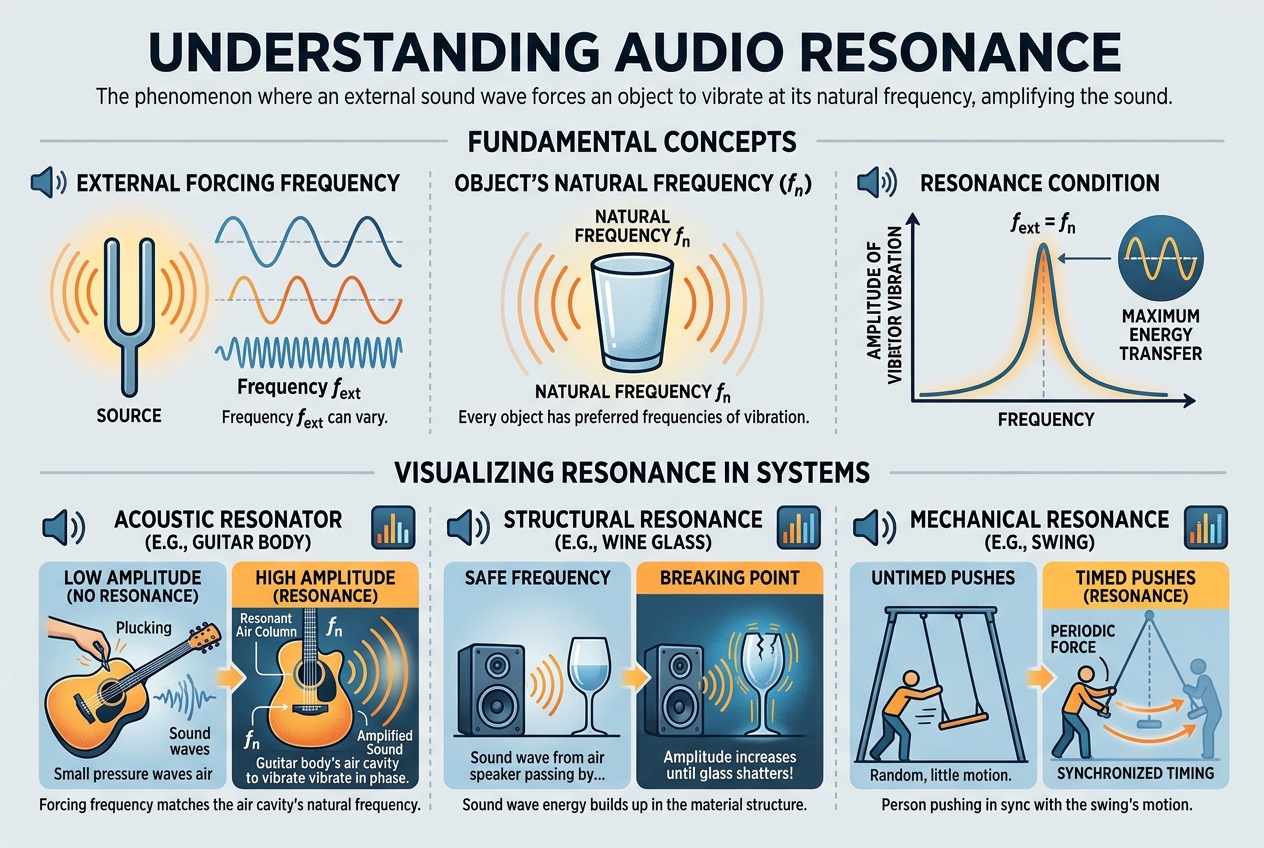
Physical Feedback (Sound)
Sound systems illustrate feedback as a tangible loop: a mic hears a speaker, the signal is amplified, and a roar can cascade if unchecked. The same mechanism, scaled and tuned, creates environments where tone, resonance, and space breathe in chorus with the listener. In studio and stage design, controlling this loop becomes an art of balance—distance, direction, and damping determine whether feedback becomes chaos or orchestration.
Semantic Feedback (Customer Surveys)
In the realm of people and products, feedback lives as data points, reviews, and conversations. Positive signals can steer development toward a beloved feature, drawing in new users who share that affinity. Negative signals prompt fixes that restore confidence and system equilibrium. The magic lies in listening not just for praise or complaint, but for the subtle shifts in how a community experiences the whole.
- Positive feedback: A company pushes a product (output), collects customer survey data (input), and alters the product based on that data. Praise for a specific feature causes the company to double down on it, which attracts more users who like that feature, creating an accelerating trend.
- Negative Feedback: Customer complaints about a broken checkout process force the company to correct the error, dampening the problem and restoring the system to equilibrium.
Responding to Noise: System Disruption & Metamorphosis
Typically, systems try to reject noise. However, introducing or reacting to noise can radically transform a system’s output. Moments of disruption can ignite fundamental change. When noise is acknowledged and studied, it reveals hidden currents and potential pivots rather than mere fault lines.
Transforming Noise to Signal
History remembers artists and engineers who turned disturbance into direction. By reframing how disruption travels through a system, they redraw the boundaries of possibility. The result is a new aesthetic, a reimagined workflow, or an emergent practice that redefines what the system can become.
In the mid-20th century, audio engineers viewed amplifier distortion and microphonic feedback as catastrophic failures—unwanted noise. However, Jimi Hendrix fundamentally altered music by leaning into this negative feedback loop. Instead of moving away from his amplifiers to stop the screech, he altered his physical distance and angle to control it. By using his guitar strings to manipulate the runaway energy, he turned chaotic, structural physical noise into sustained, expressive musical signals. He proved that reacting adaptively to systemic breakdown can establish an entirely new aesthetic paradigm.
Similarity Across Scales
- Individual — using mindfulness and ethics to filter out emotional noise and isolate intent
- Relational — dampening interpersonal static to focus on core relational truth
- Institutional — applying algorithmic and administrative filters to screen out superficial noise
- Societal — utilizing historic declarations (MLK “I Have a Dream”, DOI) as societal bandpass filters
Relationship to Other Ideas Within Fractegrity
- Wheel of Beliefs / Defensive Filtering — prevents cognitive dissonance from causing structural collapse
- Bandpass Filtering / Resonance — aligns public energy in phase around core principles
- Non-Brittle Error Channels / Formalization — processes raw operational noise into structural learning
Next Threads to Pull:
Resonance
Examines how vibrating in tune with core values amplifies clarity, trust, and mutual understanding.
Signal vs. Noise & Cognitive Filters: Multiscale Signal Optimization
Offers tools for tuning cognitive filters to extract essential signal from overwhelming ambient noise.
Fracture, Feedback, and Repair: How Integrity Persists in Living Systems
Examines how living systems detect structural fracture, process feedback, and execute regenerative repair.
Feedback occurs when the output of a system is routed back as an input, a principle that applies from physical devices to human systems and even to fractal patterns. In sound systems, feedback is a tangible loop—mic, speaker, amplification—where balance through distance, direction, and damping decides whether feedback becomes chaos or orchestration. Feedback in people and products appears as data points, reviews, and conversations that guide feature development and restore system equilibrium by listening for subtle shifts in experience. Systems can transform through deliberate disruption; recognizing and studying noise reveals hidden currents that can drive new aesthetics, workflows, or practices. Disturbance can become direction, as seen from individual mindfulness to societal bandpass filtering, with patterns across scales—mindful intent, core truths, and historic declarations shaping resonance.