
Introduction to the Integrity Hub: Wholeness Under Pressure
The Integrity Hub explores what it means to remain whole under stress. Within the Fractegrity framework, integrity is not defined as static perfection or rigid force, but as scale-free structural coherence—the alignment between inner values, structural architecture, and outward action across individual, relational, and institutional dimensions.
When a system possesses integrity, every part holds together under load. When integrity fractures, the issue is rarely instantaneous; it propagates from unaddressed micro-compromises and unheeded internal friction.
Why Should I Care About Integrity?
In everyday discourse, integrity is often discussed as an abstract moral ideal. But in functional terms, integrity is what keeps structures from collapsing under load.
When an individual or organization lacks integrity, internal friction increases. Energy that should be directed toward creative growth, innovation, or purposeful work is instead consumed by managing internal contradictions, covering up structural compromises, and repairing avoidable breakdowns. Caring about integrity is fundamentally about preserving efficiency, trust, and structural longevity.
Understanding and applying core principles like integrity transforms how we navigate personal choices, team dynamics, and complex societal challenges:
Care allows truthfulness without making truth a weapon. It helps separate correction from condemnation: I was wrong need not mean I am without worth.
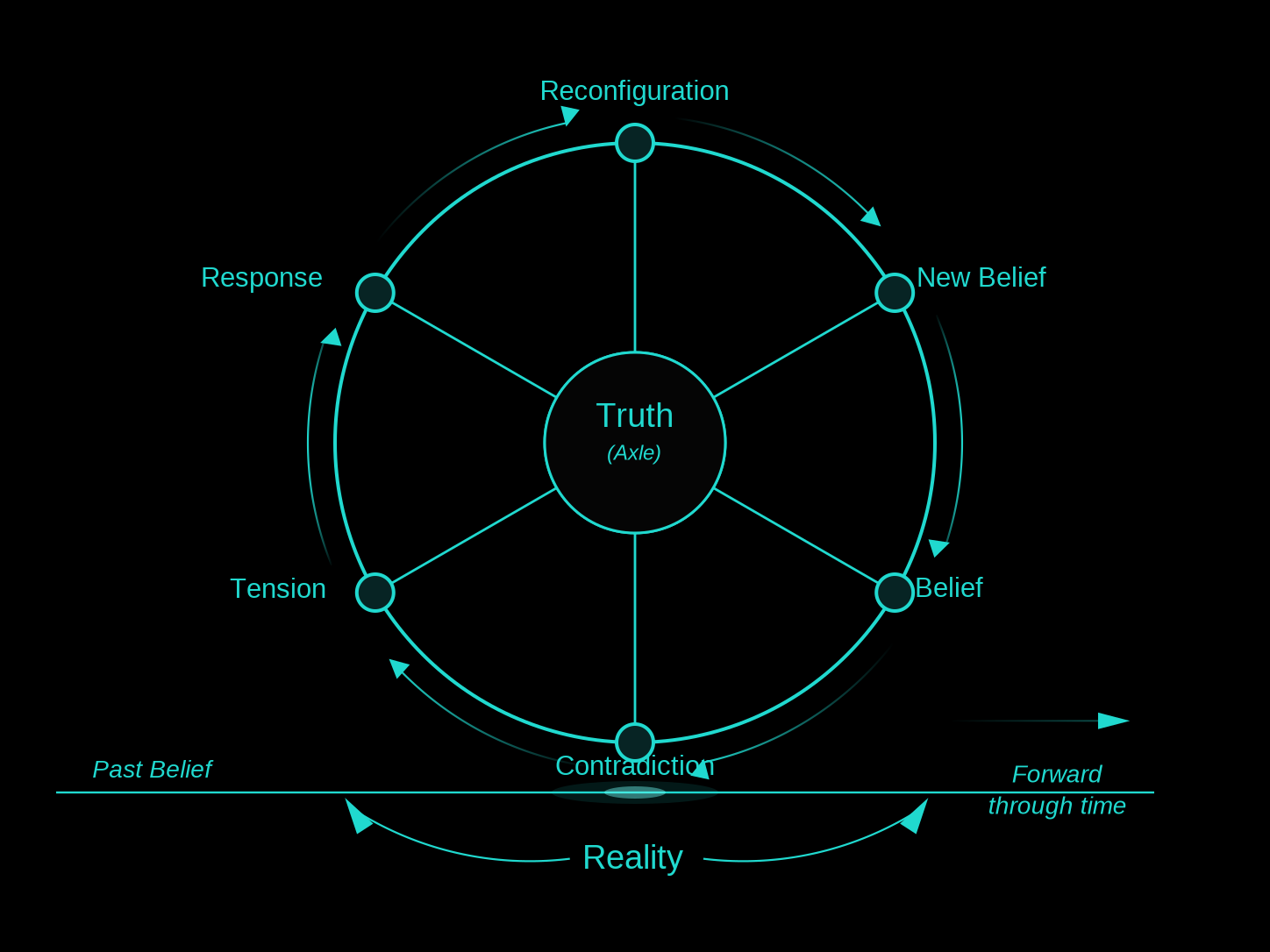
Contradiction → Integrity
Until contradiction appears, there may be no meaningful test of integrity. Integrity is willingness to remain accountable to reality when reality requires revision. Contradiction is where integrity gets tested.
Integrity requires that internal understanding remain accountable to external reality. A belief can be psychologically coherent while being factually false. Integrity therefore cannot mean merely “being consistent with myself”; it must include willingness to test oneself against what is actually there.
Contradiction is where integrity is tested.
Integrity is not infallibility. Separating integrity from infallibility reduces personal attachment. Integrity is not the preservation of what I believe. Integrity is the preservation of my willingness to remain in relationship with reality as what I believe changes.
Once “being wrong” no longer means “being a bad, foolish, or untrustworthy person,” the system gains freedom of movement. You can say: I believed this and the evidence changed my understanding. I now believe something different.
What happens when reality pulls against what I believe?
I allow reality to test it. Integrity is our relationship to reality across time. Today’s is will become was. The question is whether the transition happens through denial, erosion, rupture, or conscious revision.
Inquiries
These questions can clarify our integrity over time:
- Am I acting with integrity?
- Am I aligning with reality or defending identity?
- Who or what am I accountable to?
- What change is possible?
- What might I still not see?
The wheel describes the process of interrupting belief perseverance through time. Fractegrity provides seven lenses through which that process can be examined across scale and context.
Similarity Across Scales
- Micro (Individual Scale): Integrity manifests as the inner compass—the quiet alignment between internal values, spoken promises, and everyday craft. It is the commitment to quality even when unobserved.
- Meso (Relational & Organizational Scale): Integrity operates as transparent feedback channels, trustworthy commitments, and non-condemnatory support loops. Systems maintain integrity by acknowledging strain before structural issues occur.
- Macro (Societal & Environmental Scale): Integrity shows up as institutional resilience and scale-free coherence. Global structures remain sound only when their localized components uphold mutual trust and shared orientation.
Next Threads to Pull:
What is Integrity and Why It Matters Now
Establishes the foundational definition of integrity as structural coherence rather than moral performance or rigid dogma.
Integrity in Physical and Conceptual Structures
Examines load-bearing capacity, material selection, and workmanship across physical architecture and human institutions.
When Integrity Fractures: The Hidden Cost of Cutting Corners
Diagnoses how micro-compromises and unaddressed friction compound over time into systemic breakdown.
Integrity explores what it means to remain whole under pressure. It exposes the alignment between inner values and outward action, showing integrity not as rigidity or moral perfection, but as consistency across changing conditions.