Declaration of Balance, Belonging, and Becoming: Fractal Tensegrity Oath
Tension held, not eliminated
Balance is often imagined as stillness: a point of rest, an equilibrium where movement stops. In lived systems, this idea rarely holds. What appears balanced in theory often collapses under change, pressure, or time. Dynamic balance names a different condition — one in which stability arises from tension held well, not from its absence. This contrasts with classical tensegrity structures, where long-range stability is maintained through continuous tension within a largely fixed geometry.
Perhaps the most accessible example of dynamic balance is riding a bicycle. One has to maintain a combination of velocity, direction and adjustment to ride a bicycle. At first it is intimidating. With practice, it becomes second nature.
Balance Is Not Neutrality
Balance does not mean occupying the middle of opposing positions. It does not require compromise for its own sake, nor does it imply the equal weighting of all forces. Dynamic balance emerges when forces are allowed to pull against one another within a structure that can hold them. Remove the tension, and the system loses strength. Overconstrain it, and the system becomes brittle.
Stability Through Relationship
In living systems, balance is maintained through relationship rather than control.
Elements respond to one another continuously:
- pressure meets resistance
- flexibility meets constraint
- continuity meets change
Balance is not achieved once and preserved. It is continuously renegotiated as conditions shift. This is why dynamic balance often appears as movement rather than rest.
The Cost of Eliminating Tension
Many systems attempt to achieve balance by removing tension. Conflict is suppressed. Differences are flattened. Complexity is simplified. Initially, this can feel stabilizing. Over time, it produces fragility.
When tension is eliminated rather than held:
- feedback is lost
- adaptation slows
- small stresses accumulate unnoticed
- failure arrives suddenly rather than gradually
Dynamic balance depends on tension being visible, tolerated, and informative.
Dynamic Balance and Alignment
Alignment provides direction. Balance provides sustainability. A system can be aligned and still burn itself out if balance is ignored. Conversely, a balanced system without orientation may persist without meaning. Dynamic balance is what allows alignment to endure over time.
Recognizing Loss of Balance
Loss of balance often appears as:
- rigidity mistaken for strength
- exhaustion mistaken for commitment
- silence mistaken for agreement
- speed mistaken for progress
- adjustment perceived as failure
These are not moral failures. They are structural warnings. Balance does not fail catastrophically at first. It erodes quietly, then suddenly manifests.
Restoring Balance
Restoring balance rarely requires dramatic intervention.
Often it begins with:
- reintroducing suppressed tension
- slowing enough to feel strain
- allowing opposing forces to be named
- adjusting structure rather than enforcing behavior
Dynamic balance returns when systems are permitted to respond and adjust, not merely perform.
Similarity Across Scales
- Individual — committing to personal truth and self-discipline in thought and action
- Relational — weaving interpersonal promises rooted in mutual listening and trust
- Institutional — structuring governance to honor both individual autonomy and collective strength
- Societal — recognizing the living web of culture where every part resonates with the whole
At every scale, balance fails when one force is allowed to dominate unchecked.
Relationship to Other Ideas Within Fractegrity
- Fraccountability / Fractal Accountability — turns promises into load-bearing structural cables
- Interdependence / Declarations — grounds governance in relational stewardship
- Living Geometry / Resonance — models cultural stability through continuous attunement
Balance is not separate from these ideas. It is what allows them to coexist without collapse.
Next threads to pull:
Tensegrity — The Hidden Balance of the Constitution
Applies tensegrity mechanics to constitutional democracy, showing how tension preserves liberty.
Intro to Balance
Introduces the core concepts of dynamic balance, tension, and equilibrium in living architectures.
Parallel Concepts That Echo Across Time and Space
Explores historical, scientific, and philosophical ideas that mirror Fractegrity principles across eras.
A Declaration of Balance, Belonging, and Becoming – Fractal Tensegrity
Introduction to Fractal Tensegrity (Fractensegrity)
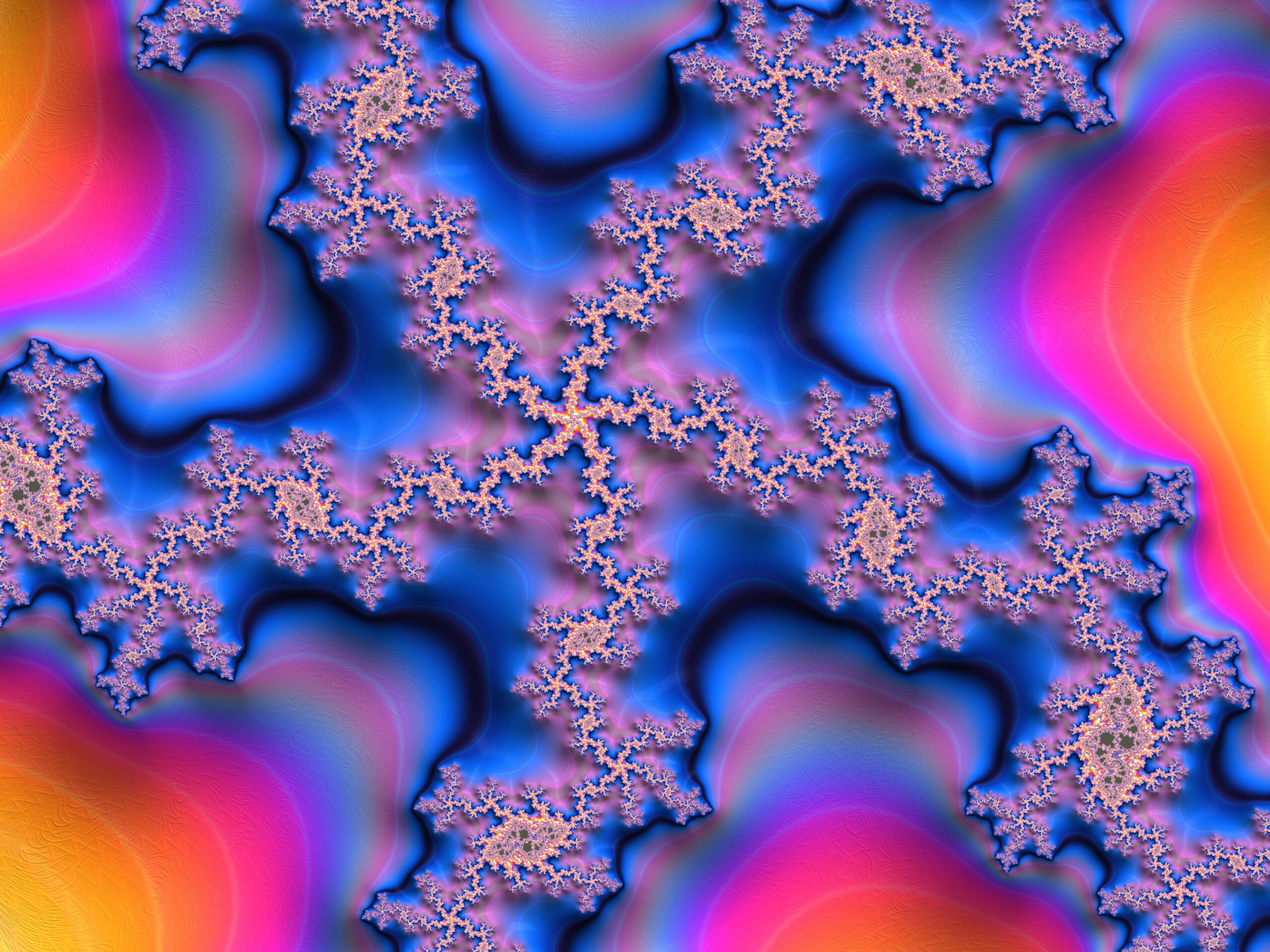
Fractal tensegrity (fractensegrity) bridges geometry and governance. Inspired by tensegrity structures — systems that balance tension and compression to maintain stability — fractal tensegrity imagines social systems where freedom and responsibility, individuality and interdependence, hold one another in dynamic equilibrium. It is structural empathy — integrity through balance.
Part I — The Web We Weave — Being
I stand within the web of becoming,
a single strand among countless others.
I vow to keep my tension true—
not to pull apart, nor to slacken—
for the strength of the whole depends on the honesty of each line.
I honor the invisible threads that hold us:
truth spun between word and deed,
care stretched between self and other.
Where I falter, may others steady me;
where they strain, may I bear my part.
For I am not the center, nor the edge—
I am the resonance between them.
I am the echo of design repeating,
the fractal filament where freedom meets form.
This is the oath of fractal tensegrity —
that what is whole is holy,
and what is held in balance, endures.
Part II — The Architecture of Action — Doing
I have watched the patient builder weave,
each thread cast in trust,
each intersection a promise.
Her art was not command but response,
a dialogue with air and motion.
So I vow to act in that same spirit—
to build through awareness,
to strengthen through listening,
to anchor my words where they can bear the weight of others.
When I stretch, let it be with purpose;
when I pull, let it be with care.
May my every motion find its balance
in the unseen geometry of belonging.
For culture is a web we co-create,
its fibers drawn from memory, mercy, and meaning.
When one strand trembles, all feel the motion.
When one life heals, all are restored in part.
The spider taught me that beauty endures in tension,
that form arises from faith,
that even in death, the pattern remains.
So I take my place in the larger weave—
not to dominate, but to resonate;
not to possess, but to connect.
This is the practice of fractal tensegrity:
each of us a point of balance,
each of us a node of care,
all of us the web.
Part III — The Continuum of Becoming — Reflecting
I look back upon the pattern of my life,
and see not a straight line,
but a spiral—
each turn returning me to myself
with greater depth and finer thread.
What I was shaped what I did.
What I did formed what I had.
And what I had—
if I tended it with care—
became nourishment for what I now am.
Fractal tensegrity teaches:
every completed form is still becoming.
Every tension resolved gives birth to a subtler one.
The web never ends—
it refines.
It does not stretch toward infinity;
it iterates into it.
So I vow to remember:
the structure I inhabit is the echo of my choices.
The culture I join is the resonance of our shared acts.
Integrity is not a summit reached,
but a rhythm kept—
a balance renewed across scales of time and soul.
Let my “was” be honest,
my “did” be kind,
my “had” be enough.
And may all of it—past, present, and yet to unfold—
align in coherence with the living design
that holds galaxies and gossamer alike.
For this is fractal tensegrity:
the remembering of pattern,
the honoring of tension,
the becoming of balance.
Coda: The Living Geometry
Thus the Oath of Fractal Tensegrity stands—
not as doctrine, but as dialogue;
not as command, but as coherence.
It invites each of us to be both builder and thread,
both still point and subtle motion.
It calls us to hold ourselves
and one another
in the gentle, persistent strength
of dynamic integrity—
to live as the web lives:
flexible, responsive, resilient,
forever weaving itself whole.
Dynamic balance does not promise comfort. It promises resilience. When tension is held rather than denied, systems gain the capacity to adapt without fracture. Balance, in this sense, is not a destination — it is a living condition.