
The Inner Compass & Moral Craft: Orientation Before Instruction
Orientation before instruction
Much of modern life emphasizes speed, certainty, and execution. Decisions are evaluated by outcomes, efficiency, or alignment with external standards. In this environment, it is easy to confuse motion with direction. The Inner Compass names a different faculty: the capacity to sense orientation before choosing action.
Orientation Is Not Position
Position describes where one stands. Orientation describes where one is facing. Two people can occupy the same position while moving in entirely different directions. Likewise, a system may appear stable while drifting steadily off course. The Inner Compass does not answer the question, “Where am I?” It answers a quieter, more consequential one: “Where am I moving toward?” This is an important consideration to close the gap between where one is and where one wants to be.
Direction Before Velocity
Direction and orientation make movement meaningful as well as efficient. Without orientation, acceleration intensifies misalignment and dislocation. The Inner Compass functions as a stabilizing reference — not to halt movement, but to guide it. When orientation is clear, even slow movement is effective. When orientation is lost, speed becomes corrosive. This is why pauses, reflection, and recalibration are not inefficiencies. They are directional corrections.
How the Inner Compass Is Felt
Like resonance, orientation is often sensed before it is articulated. The Inner Compass may appear as:
- a sense of ease or unease
- clarity amid uncertainty
- coherence rather than confusion
- discomfort that invites attention rather than avoidance
- an intuition that persists even when inconvenient
These signals are not commands. They are information — subtle indicators of coherence or drift.
Calibration, Not Certainty
An inner compass does not provide absolute answers. It requires calibration. Experience, reflection, dialogue, and consequence all contribute to its accuracy. Over time, orientation becomes more reliable — not because it eliminates doubt, but because it remains responsive to feedback. Living in alignment means trusting the compass enough to consult it — and humble enough to recalibrate it.
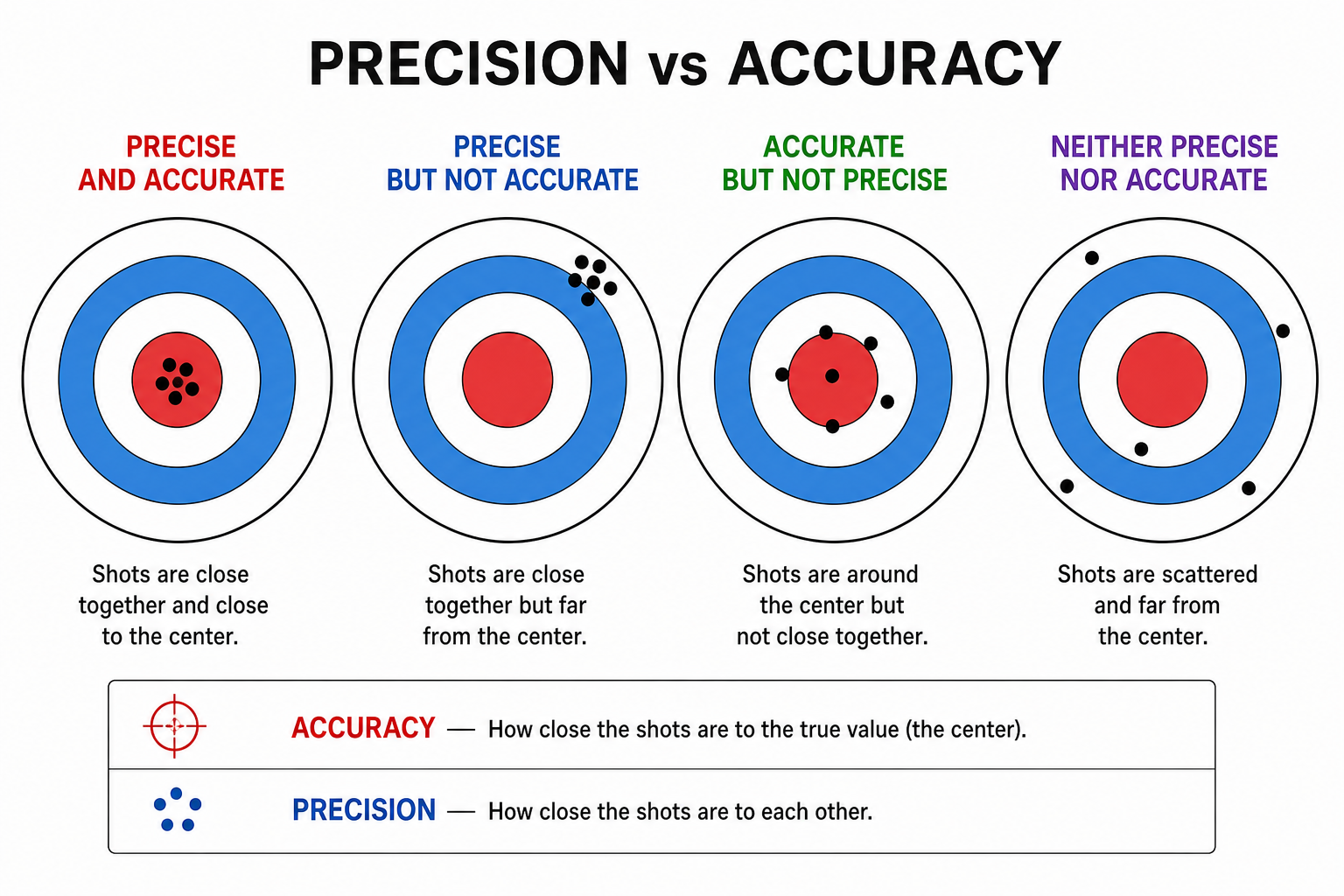
Accuracy vs. Precision
Precision is not the same as accuracy. It is better to have an accurate concept of location than to have a precise concept of dislocation. Precision without orientation can feel confident while moving in the wrong direction.
Similarity Across Scales
- Individual — trusting internal ethical intuition over external social pressure
- Relational — maintaining accurate mutual orientation even during ambiguous situations
- Institutional — guiding executive decisions by institutional purpose rather than inertia
- Societal — steering civilizational choices toward long-term biospheric viability
When orientation is lost at one scale, it often reappears as misalignment at another.
Relationship to Other Ideas Within Fractegrity
- Morality vs. Craft / Workmanship — studies structural failure to build resilient real-world systems
- Accuracy vs. Precision / Orientation — prioritizes true direction over precise error
- Integrity / Foundational Anchor — anchors the compass so it stays true under strain
The Inner Compass is not separate from these ideas. It is how they are consulted in motion.
Next Threads to Pull:
Direction Before Velocity: Speed as Amplifier of Orientation
Emphasizes why establishing clear orientation is essential before accelerating speed or scaling operations.
Orientation After Systemic Shift & Under Pressure
Offers strategies for recalibrating purpose and direction following major disruption or crisis.
Production With and Without Orientation
Differentiates between oriented, purposeful work and unguided output that causes systemic clutter.
The Inner Compass does not eliminate uncertainty. It offers direction when certainty is unavailable. When consulted regularly, it prevents small drift from becoming large fracture. When ignored, even well-intentioned movement can lose its way. Orientation comes first. Action follows.